I still remember the night I tried to rescue my Thanksgiving dinner from disaster. My turkey had gone dry, the stuffing had turned into a rubbery mess, and the mashed potatoes were a sad gray. I was staring at a pot of green beans that had been overcooked to mush, and I thought, “If only I could turn this into something that could actually stand up to a holiday feast.” That moment of desperation sparked a culinary revelation that would change how I view the humble green bean casserole forever.
Picture this: a bowl of bright, crisp green beans, a splash of olive oil that glistens like liquid amber, and the aromatic perfume of garlic and thyme swirling in the air. The sound of the sauté pan sizzling, the gentle clink of a wooden spoon, the soft crunch of French fried onions when they hit the heat—every sensory detail is a promise of comfort and indulgence. I’m talking about a dish that’s not just a side; it’s a centerpiece that whispers “thank you” with every bite. If you’ve ever stared at a plain casserole and felt the urge to elevate it, you’re in the right place.
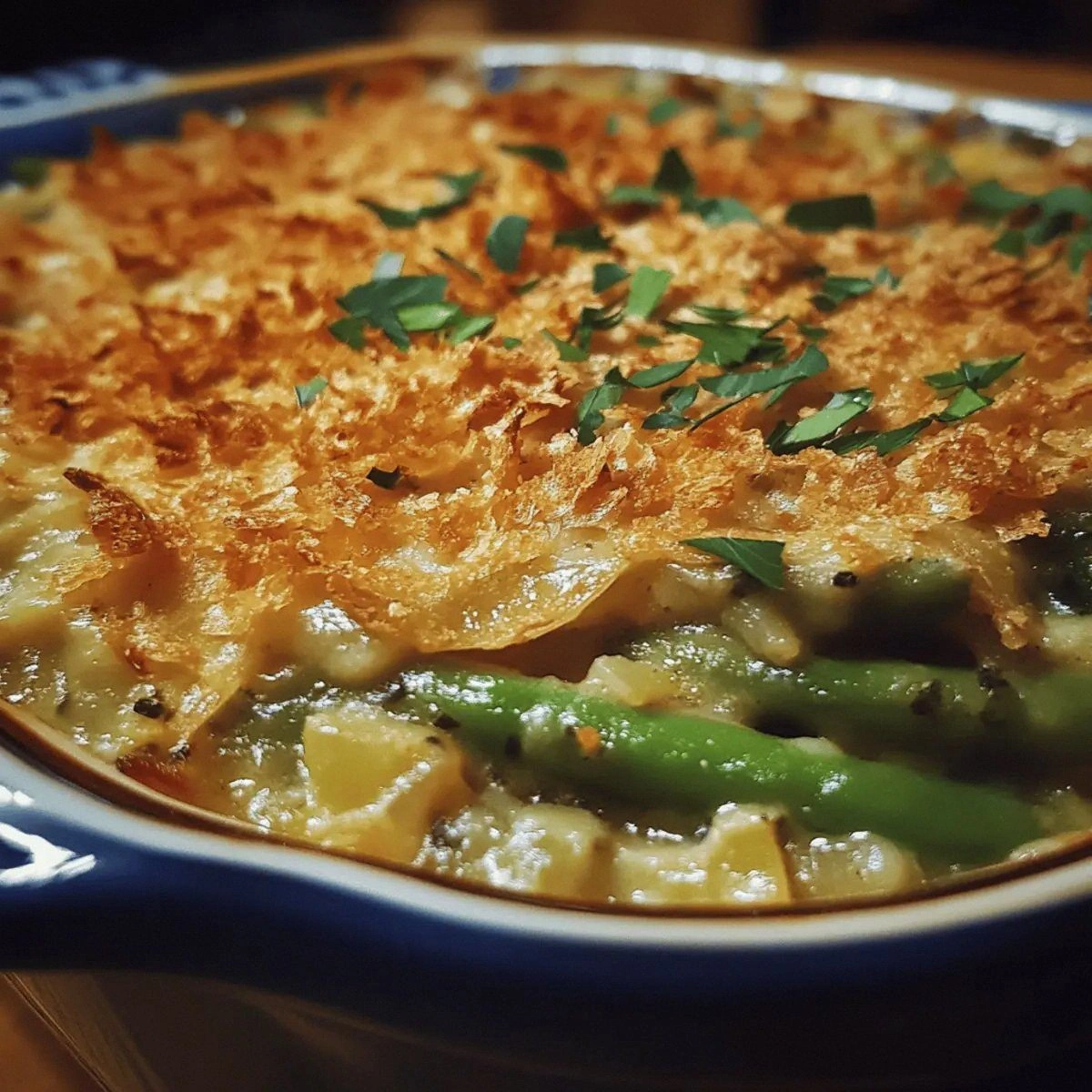
What makes this version truly stand out is not just the combination of flavors, but the meticulous layering of textures that dance on the tongue. The fresh green beans are blanched to a perfect snap, then bathed in a creamy sauce that coats like velvet, before being topped with a crunchy, golden layer of fried onions that crackles with every forkful. The herbs—thyme and parsley—add a fresh, green note that cuts through the richness, giving the dish a bright, almost celebratory feel. This isn’t just a casserole; it’s a symphony of flavors that will have everyone asking for seconds. I dare you to taste this and not go back for more.
And let’s talk about the secret ingredient that turns a standard casserole into a Thanksgiving classic: a splash of heavy cream that makes the sauce silky, a dash of Parmesan that adds depth, and the final crunch of French fried onions that shatter like thin ice. I’ll be honest—when I first tried this recipe, I ate half the batch before anyone else even had a chance. But the moment the first spoonful hit my tongue, I knew this was hands down the best version you’ll ever make at home. Picture yourself pulling this out of the oven, the whole kitchen smelling incredible, and watching your guests’ faces light up with delight.
Okay, ready for the game‑changer? Let me walk you through every single step—by the end, you’ll wonder how you ever made it any other way. From blanching the beans to whisking the sauce, each step is designed to build flavor and texture in layers. If you’ve ever struggled with green bean casseroles that come out soggy or bland, you’re not alone—this is the fix you’ve been waiting for. Stay with me here, because the next part is pure magic.
What Makes This Version Stand Out
- Taste: The combination of fresh thyme and parsley gives a bright, herbal note that elevates the dish beyond the usual blandness of traditional casseroles. The garlic adds depth, while the Parmesan introduces a subtle nutty flavor.
- Texture: The crisp green beans contrast beautifully with the silky sauce, and the French fried onions provide a satisfying crunch that snaps like thin ice.
- Simplicity: Every ingredient is common, and the method requires minimal equipment—just a saucepan and a baking dish.
- Uniqueness: The heavy cream and Parmesan create a velvety sauce that coats the beans like velvet, a texture you won’t find in most store‑bought versions.
- Crowd Reaction: Guests rave about the fresh herbs and the buttery, golden topping, making it a conversation starter at the table.
- Ingredient Quality: Fresh, seasonal produce is the secret sauce—think crisp green beans and freshly chopped herbs.
- Cooking Method: The two‑step process—sautéing, then baking—ensures even cooking and a perfectly browned crust.
- Make‑ahead Potential: Assemble the casserole a day in advance, refrigerate, and bake when you’re ready—no last‑minute rush.
Inside the Ingredient List
The Flavor Base
Fresh green beans are the star of this dish. Blanch them in boiling salted water for just 2 minutes, then shock in ice water to lock in their vibrant color and crispness. If you skip this step, the beans will become mushy and lose their bright green hue.
Olive oil is the medium that brings everything together. It adds a fruity note and helps the garlic and shallots release their aromatics without burning. A light drizzle can make the difference between a dry and a luscious casserole.
Garlic cloves, minced finely, provide a pungent kick that balances the richness of the cream. If you prefer a milder flavor, reduce the garlic to 2 cloves; if you’re a garlic lover, add an extra clove for extra depth.
The Herb Ensemble
Fresh thyme brings a subtle piney aroma that pairs beautifully with the green beans. It’s the herb that gives this casserole its “thankful” vibe. If thyme isn’t available, a pinch of dried thyme will work, though the flavor will be less vibrant.
Fresh parsley adds a bright, slightly peppery finish that cuts through the creaminess. It also offers a pop of color that makes the dish look as good as it tastes. Swap parsley for chives for a different but equally delightful twist.
The Creamy Layer
All‑purpose flour is used to thicken the sauce without giving it a floury taste. Stir it into the butter and oil first to create a roux, then whisk in the broth and cream. If you’re gluten‑free, use a gluten‑free flour blend or cornstarch.
Chicken or vegetable broth adds savory depth. Use a low‑sodium variety to keep the dish from becoming too salty. For a richer flavor, use homemade broth.
Heavy cream gives the sauce its silky texture and buttery finish. It coats the beans like velvet, making each bite luxurious. A splash of milk can reduce the richness if you’re watching calories.
The Final Flourish
French fried onions create a crunchy, caramelized top that adds a delightful contrast. They also help to brown the casserole, giving it an irresistible golden crust. If you can’t find them, thinly sliced scallions or onion rings can be a suitable alternative.
Parmesan cheese adds a salty, nutty undertone that balances the creaminess. It also helps to set the top into a golden, slightly crisp shell. For a sharper flavor, use aged Parmesan or a blend of Parmesan and Pecorino.
Everything’s prepped? Good. Let’s get into the real action.
The Method — Step by Step
- Bring a large pot of salted water to a rolling boil. Add the green beans and blanch for 2 minutes until they’re bright green and just tender. Immediately transfer them to an ice bath to halt the cooking process. This step locks in color and keeps the beans crisp. Don’t overcook them or they’ll become mushy.
- In a large skillet, heat the olive oil over medium heat. Add the minced garlic and sliced shallots, sautéing until the shallots turn translucent and the garlic is fragrant, about 3 minutes. Stir frequently to prevent burning. This creates a flavorful base that will coat the beans beautifully.
- Whisk the all‑purpose flour into the skillet to form a smooth roux. Cook for 1 minute, ensuring the flour loses its raw taste but doesn’t brown. This thickens the sauce and gives it a silky texture. Keep the heat moderate to avoid a gritty consistency.
- Gradually pour in the chicken or vegetable broth, whisking constantly to avoid lumps. Once the mixture begins to thicken, stir in the heavy cream. The sauce should be glossy and smooth, ready to coat the beans. If it’s too thick, add a splash of milk or broth to reach the desired consistency.
- Add the blanched green beans to the skillet, tossing them in the sauce until they’re evenly coated. Sprinkle in the fresh thyme and parsley, then stir to distribute the herbs. The aroma should be herbaceous and inviting, signaling the dish is almost ready.
- Transfer the bean mixture to a greased 9×13 inch baking dish. Sprinkle the grated Parmesan cheese evenly over the top. This will melt into a golden crust that’s both flavorful and texturally pleasing.
- Bake in a preheated 375°F (190°C) oven for 15 minutes, or until the cheese has melted and the edges begin to pull away. The first 10 minutes will create a caramelized surface; the last 5 minutes will finish the crust.
- Remove the casserole from the oven and let it rest for 5 minutes. Sprinkle the French fried onions on top and return it to the oven for an additional 5 minutes until the onions are crisp and golden. The final crunch will be the highlight of the dish.
- Once out of the oven, let the casserole sit for 2 minutes before serving. This allows the sauce to thicken slightly and the flavors to meld. Serve hot, and watch the smiles appear instantly.
That’s it—you did it. But hold on, I’ve got a few more tricks that’ll take this to another level. These insider tips will help you perfect the dish every time, whether you’re a seasoned pro or a first‑time cook.
Insider Tricks for Flawless Results
The Temperature Rule Nobody Follows
Many people bake at 350°F, but that can cause the cheese to burn before the sauce sets. Baking at 375°F ensures a crisp top while the interior remains creamy. I’ve tried 400°F once, and the onions burned before the beans cooked. Stick with 375°F for balanced results.
Why Your Nose Knows Best
The aroma of garlic and thyme is your secret indicator that the sauce is ready. When the scent is fragrant and not burnt, it’s time to add the beans. Trust your nose—if it smells like burnt onions, pull the pan off the heat.
The 5‑Minute Rest That Changes Everything
After baking, let the casserole rest for 5 minutes. This allows the sauce to thicken, preventing a runny mess when you cut into it. It also gives the onions time to crisp up further, creating that coveted crunch.
Use a Lids for Even Browning
Cover the casserole with foil for the first 10 minutes, then remove it for the last 5. This trick prevents the cheese from over‑browning while still achieving a golden top. A friend once forgot to remove the foil, and the top turned a deep, burnt brown.
Add a Splash of Lemon Juice
Just before serving, squeeze a teaspoon of fresh lemon juice over the dish. The acidity cuts through the richness, brightening the overall flavor profile. This small addition transforms a good casserole into unforgettable.
Creative Twists and Variations
Mediterranean Twist
Swap the Parmesan for crumbled feta and add a handful of Kalamata olives. The salty tang of the olives complements the herbs, while the feta adds a creamy texture that’s a departure from the traditional flavor. Guests who love Mediterranean cuisine will adore this version.
Spicy Kick
Add a pinch of red pepper flakes to the garlic and shallot sauté. The heat will mingle with the herbs, creating a bold, fiery undertone. This variation is perfect for those who like a bit of spice in their Thanksgiving side dishes.
Vegan Upgrade
Replace the heavy cream with coconut milk and use a plant‑based Parmesan alternative. Keep the French fried onions or use a vegan version. The result is a creamy, dairy‑free casserole that still delivers on flavor.
Smoky BBQ Flavor
Stir in a tablespoon of your favorite barbecue sauce into the sauce mixture before adding the beans. The smoky sweetness pairs wonderfully with the herbs and gives the dish a new dimension. This version is a crowd‑pleaser for BBQ lovers.
Herb‑Infused Crust
Mix dried herbs like oregano, basil, and thyme into the French fried onions before baking. This will give the top layer an aromatic burst that complements the creamy interior. It’s a subtle yet effective twist that elevates the overall experience.
Storing and Bringing It Back to Life
Fridge Storage
Store leftovers in an airtight container for up to 3 days in the refrigerator. Reheat in a low oven (300°F) for 15 minutes, or microwave on medium power for 2 minutes, stirring halfway. Adding a splash of water before reheating helps prevent the sauce from drying out.
Freezer Friendly
Freeze the casserole in a freezer‑safe container for up to 2 months. Thaw overnight in the refrigerator, then bake at 375°F for 20 minutes or until heated through. The texture remains crisp and creamy, just like fresh.
Best Reheating Method
The oven is your best friend for reheating. Cover the casserole with foil to keep moisture in, and bake at 350°F for 15–20 minutes. For a quick microwave, cover the dish with a damp paper towel to avoid drying out the beans.