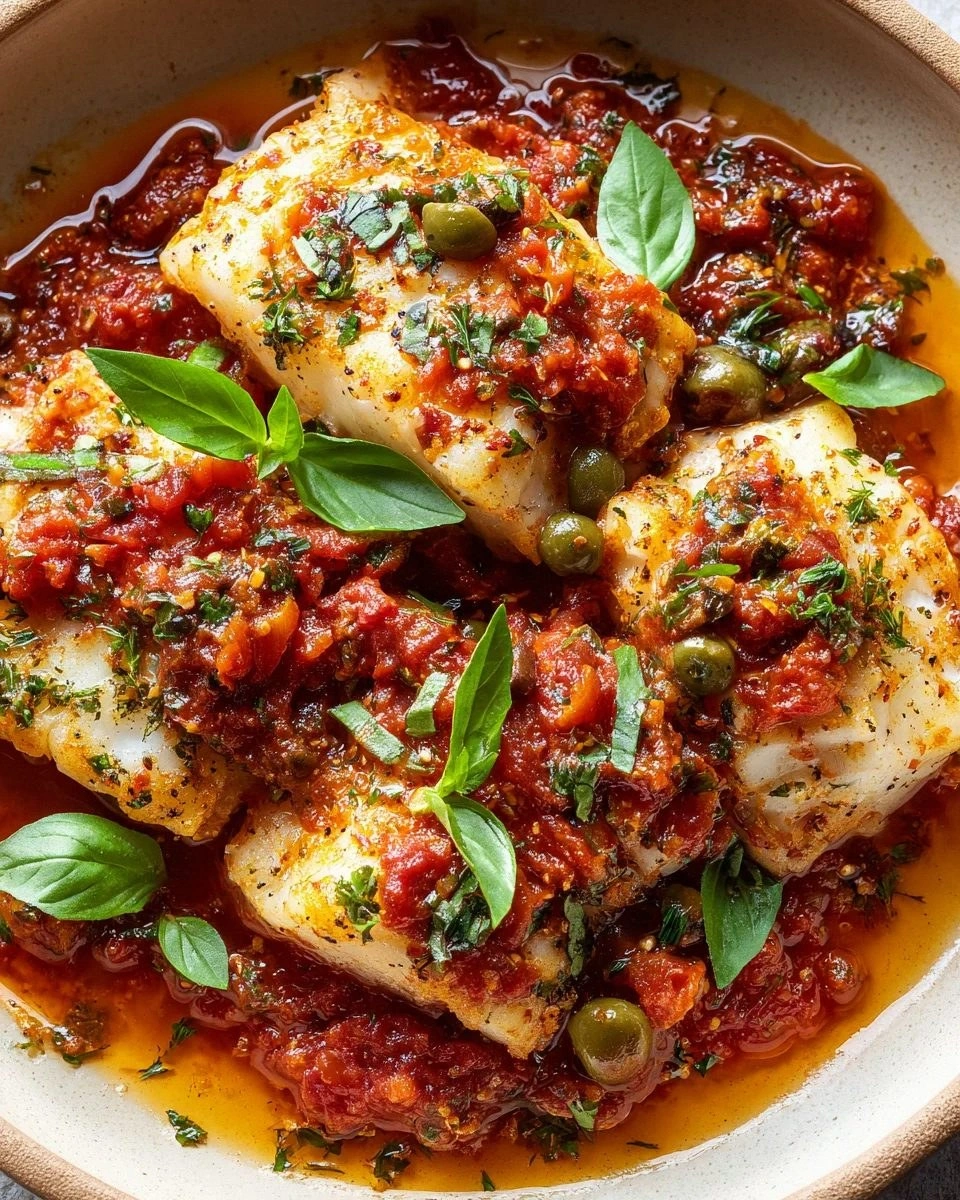
I still remember the Thursday night when my smoke alarm serenaded the entire apartment building while I tried to impress a date with a fancy fish dinner. There I stood, fan in hand, cursing a dry, overcooked fillet that tasted like disappointment sprinkled with embarrassment. Fast forward three weeks and a dozen test runs, and I stumbled on this fish puttanesca—a dish so outrageously flavorful, so ridiculously fool-proof, that it erased every kitchen failure I'd ever had. The sauce alone is a rowdy party of tomatoes, olives, capers, and garlic that practically begs for crusty bread to swoop in like a superhero and save the last drop.
Picture this: butter sliding across a hot pan, anchovies dissolving into savory glitter, and tomatoes bubbling like a mini volcano of deliciousness. Your kitchen smells like a seaside trattoria where the chef refuses to take shortcuts and the patrons refuse to leave. I dare you to taste this and not go back for seconds—heck, I ate half the batch before anyone else got to try it, standing over the stove with a hunk of garlic bread as my only witness. If you've ever struggled with fish that flakes into sawdust or sauces that taste flat, you're not alone—and I've got the fix.
This version trades the usual pasta for tender white fish that soaks up every ounce of that briny, garlicky magic. Most recipes get this completely wrong, treating the fish like an afterthought that gets tossed in at the end. Here's what actually works: we build the sauce, we nestle the fish right into the simmering goodness, and we let everything finish together so the fillets stay silky while the sauce turns glossy and intense. Stay with me here—this is worth it.
Okay, ready for the game-changer? We'll finish with a pat of butter swirled in off the heat, giving the sauce a restaurant-level sheen that coats each bite like velvet. By the end of this journey you'll wonder how you ever made fish any other way, and your dinner guests will assume you hired a private chef while they weren't looking. Let me walk you through every single step—by the end, you'll wonder how you ever made it any other way.
What Makes This Version Stand Out
One-Pan Wonder: Everything happens in a single skillet, which means fewer dishes and more time to refill your wine glass. The fish cooks directly in the sauce, soaking up every last bit of briny, garlicky flavor instead of sitting sadly on the side.
Sauce That Sticks Around: Because we crush whole tomatoes by hand, you get these gorgeous rustic chunks that burst like flavor bombs on your tongue. The sauce is thick enough to spoon over garlic bread but light enough that the fish never feels drowned.
Butter, Butter, Butter: Most puttanesca recipes skip the dairy, but we're rebels. A final knob of butter melts into the sauce and rounds out the sharp edges of olive and caper, giving you that restaurant finish you'll dream about later.
Anchovy Magic: Don't even think about leaving them out—they dissolve completely and leave behind a deep, salty backbone that makes tomatoes taste more tomato-y. I promise no one will bite into a fishy chunk; they just melt into savory gold.
Weeknight Friendly: From fridge to table in 40 minutes flat, which means you can roll in from work, crank up some music, and still eat like you're on vacation in Naples. Future pacing: picture yourself pulling this out of the oven, the whole kitchen smelling incredible, and your roommates drifting in like cartoon characters following a pie on a windowsill.
Crowd-Pleasing Flexibility: Mild white fish keeps picky eaters happy, while bold sauce satisfies the adventure-seekers. I've served this to toddlers, grandparents, and self-proclaimed anchovy-haters, and every plate came back scraped clean.
Alright, let's break down exactly what goes into this masterpiece...
Inside the Ingredient List
The Flavor Base
The butter here is more than richness—it carries the garlic and anchovy flavors so they coat the fish like a protective, tasty blanket. Skip it and the sauce tastes sharp, not harmonious. If you're dairy-free, swap in a high-quality olive oil, but expect a slightly sharper edge that the tomatoes will need an extra minute to tame.
Garlic gets chopped, not minced, because we want little golden nuggets that sing rather than disappear. Six cloves sounds like a vampire-repelling amount, but the simmer mellows them into sweet, mellow whispers. I'll be honest—when I tested four cloves, the sauce tasted timid, like it was afraid to introduce itself.
Anchovies are the umami fairy dust. They dissolve within 60 seconds, leaving behind a salty depth that makes tomatoes taste sun-warmed and alive. If you absolutely refuse, substitute one teaspoon of fish sauce, but know you're missing that luxurious body only anchovies can give.
The Texture Crew
Whole tomatoes get a quick hand-crush so you keep those juicy pockets that burst when bitten. Diced tomatoes are too uniform and—dare I say—boring. San Marzano are the gold standard, but any plum tomato packed in juice (not puree) will make you happy.
Olives bring pops of briny chew. I like Kalamata for their winey complexity, but a mix with milder black olives keeps guests guessing. Halve them so they nestle against the fish instead of rolling away like rebellious marbles.
Capers are the tiny green fireworks—little sour sparks that cut through the buttery sauce. Rinse them quickly so you control salt levels, then drain well; nobody wants watery puttanesca.
The Unexpected Star
Non-alcoholic white wine adds acidity without booze. Pick one that's crisp and not oaky—think sauvignon blanc style. If all you have is broth, add a squeeze of lemon at the end, but know you're trading bright clarity for mellow comfort.
Dried oregano and thyme are the Italian grandmother touch. They bloom in the fat and perfume the whole kitchen. Fresh herbs are lovely but too delicate; this sauce needs the sturdier, earthy punch of dried.
The Final Flourish
White fish is our blank canvas—cod, halibut, haddock, or even snapper all work. Look for fillets that are translucent and smell like the ocean, not fishy. Thicker pieces stay juicier, so if your store only has thin ones, fold them in half like little fish packages.
Fresh basil or parsley scattered at the end is optional but highly recommended. The green flecks signal freshness and add a grassy lift that makes the tomatoes taste even sweeter by contrast.
Everything's prepped? Good. Let's get into the real action...
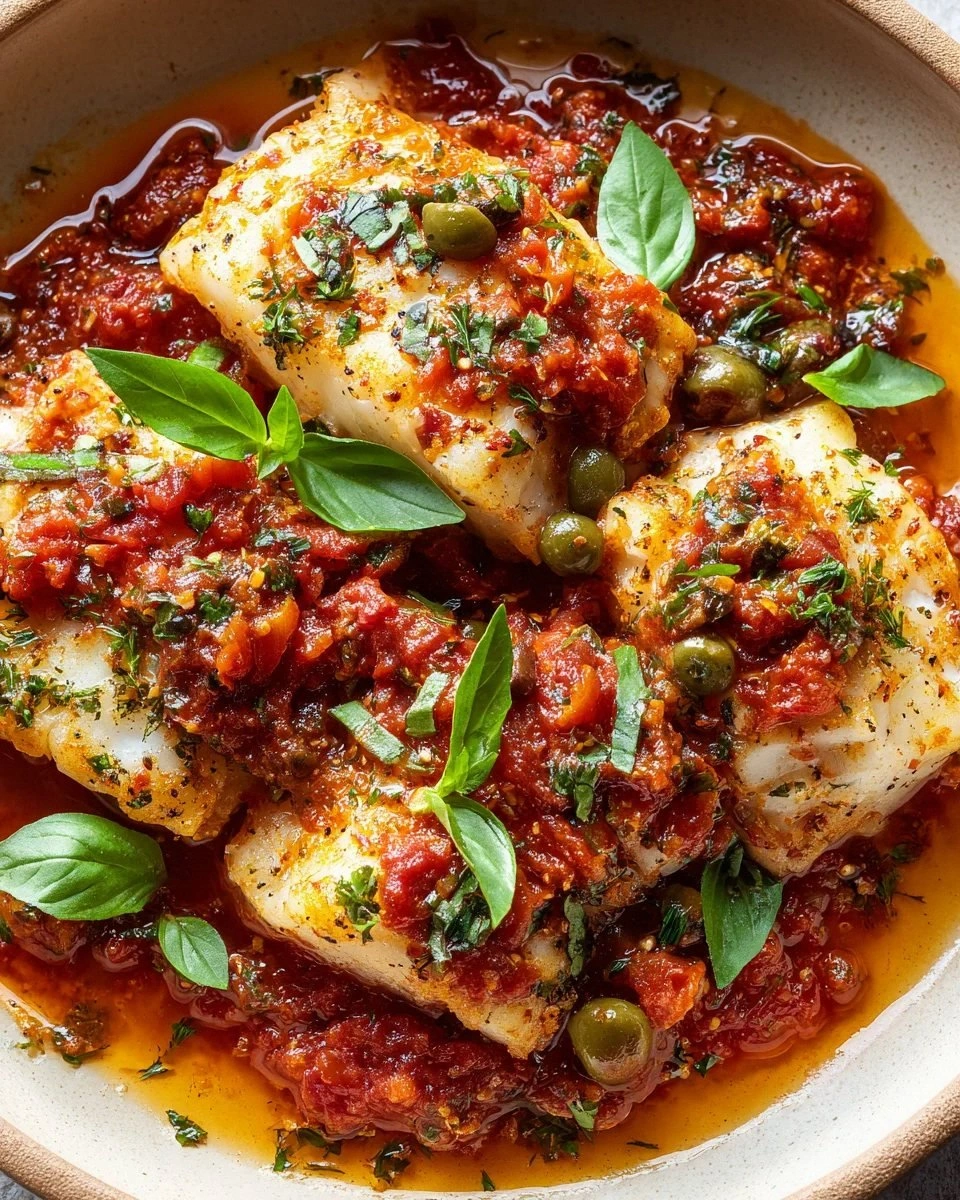
The Method — Step by Step
- Heat a wide, heavy skillet over medium and drop in the butter. Swirl until it foams and just starts to smell nutty—about 90 seconds. The sizzle when the garlic hits the pan? Absolute perfection. Toss in the chopped garlic and anchovies; mash the fillets with a wooden spoon until they melt into tiny shimmering specks that look like seasoned stardust.
- As soon as the garlic turns golden at the edges (not brown—brown is bitter city), pour in the white wine. It will steam dramatically, lifting any flavorful bits stuck to the pan. Let it bubble for two minutes so the alcohol cooks off and you're left with a tangy, concentrated glaze that smells like you're about to do something illegal to your taste buds.
- Crush the whole tomatoes over the skillet, letting their juices run in like a sunset. Swirl in the dried oregano and thyme, then reduce the heat to a lazy simmer. The sauce should burp gently, not erupt. After ten minutes it will thicken enough to coat a spoon, and your kitchen will smell like an Italian grandmother's living room.
- Stir in the olives and capers, then taste. The sauce should make your tongue dance—salty, tangy, herbal. Add a pinch of red-pepper flakes if you like a subtle burn that blooms in the back of your throat. Let everything mingle for another five minutes so the briny notes can marry the tomato sweetness in a ceremony officiated by thyme.
- Pat the fish fillets very dry and season with sea salt. Nestle them into the sauce so they're mostly submerged but still peeking out like shy submarines. Spoon a little sauce over the top to keep them moist. Cover the skillet with a lid slightly ajar so steam can escape and prevent overcooking.
- Let the fish simmer gently for 8–10 minutes, depending on thickness. This is the moment of truth—don't walk away from the stove here. When the flesh flakes into moist, glistening chunks and turns opaque all the way through, you're golden. If you're unsure, poke with a fork; it should glide in with zero resistance yet still hold together like a cohesive bite of oceanic silk.
- Remove the skillet from the heat and dot the surface with the remaining butter. Swirl the pan gently so the butter melts into glossy streaks that make the sauce shine like patent leather. Scatter fresh basil or parsley over the top for a pop of color that screams "I totally meant to be this fancy."
- Serve straight from the skillet with plenty of crusty garlic bread to mop up the sauce, or plate over a bed of steamed rice or polenta if you need to stretch it further. And now the fun part: watch everyone's eyes widen after the first bite as they mentally cancel whatever plans they had for the rest of the evening.
That's it—you did it. But hold on, I've got a few more tricks that'll take this to another level...
Insider Tricks for Flawless Results
The Temperature Rule Nobody Follows
Keep the sauce at a gentle simmer, not a rolling boil. Aggressive heat makes tomatoes taste metallic and fish seize into tight ropes. You want lazy bubbles that barely break the surface, like a jacuzzi set to relax mode. If you see rapid action, lower the heat immediately; your future self doing dishes will thank you.
Why Your Nose Knows Best
Trust your sense of smell more than the clock. When the garlic smells sweet and toasty, it's ready for the wine. If it smells sharp or bitter, you've crossed into burnt territory and there's no going back. Toss and start over—believe me, I've tried saving it, and the sauce ends up tasting like regret.
The 5-Minute Rest That Changes Everything
After the fish is cooked, let the skillet sit uncovered for five minutes before serving. This pause allows the sauce to thicken slightly and flavors to settle, plus the fish proteins relax so each bite is silky rather than tight. A friend tried skipping this step once—let's just say it didn't end well for his dinner party reputation.
Choose Your Weapon (Pan)
A wide, heavy skillet with a tight lid is ideal—cast iron or stainless steel, not non-stick. Non-stick won't give you those browned bits that dissolve into flavor gold when the wine hits. Plus, you can go from stovetop straight under the broiler if you want to caramelize the top later.
The Make-Ahead Secret
You can prep the sauce up to the fish step and refrigerate for three days. When you're ready, bring it back to a gentle simmer and proceed as written. The flavors actually deepen overnight, making this the ultimate dinner-party hack that looks effortless but tastes like you spent all day.
Creative Twists and Variations
This recipe is a playground. Here are some of my favorite ways to switch things up:
Spicy Calabrian Version
Swap red-pepper flakes for a spoonful of chopped Calabrian chilies in oil. The fruity heat builds slowly and lingers, perfect for those who like to break a tiny sweat at the table. Finish with lemon zest instead of basil for a citrusy high note that makes the spice sing.
Mediterranean Mash-Up
Add a handful of chopped artichoke hearts and a sprinkle of feta at the end. The artichokes bring a tender bite that plays beautifully against the salty olives, while feta melts into creamy pockets that tame the sauce's punch. Serve over orzo to catch every last chunk.
Coastal Coconut Curry
Replace half the wine with coconut milk and swap thyme for a teaspoon of curry powder. The result is a lush, golden sauce that tastes like Naples went on vacation to Goa. Cod loves this treatment, but shrimp would be a killer substitute if you're feeling tropical.
Spring Garden Edition
Stir in a cup of halved cherry tomatoes and a handful of baby spinach during the last two minutes of cooking. The tomatoes burst into sweet pockets that contrast the briny sauce, while spinach wilts into silky ribbons. Top with fresh mint instead of parsley for a bright, grassy twist.
Surf-and-Turf Upgrade
Brown a few slices of chorizo in the butter before adding the garlic. The smoky paprika oils infuse the entire dish, turning the sauce a sunset orange and adding meaty depth that makes you feel like you're dining in a Spanish tapas bar. This version pairs perfectly with crusty baguette and a glass of chilled sangria.
Low-Carb Zoodle Boat
Instead of serving over rice, spiralize a couple of zucchinis and toss them raw with hot sauce just before plating. The noodles warm through but stay crisp, giving you a lighter take that still feels indulgent. Bonus: you can mop up sauce with the zoodle loops and feel virtuous about the extra veg.
Storing and Bringing It Back to Life
Fridge Storage
Cool leftovers completely, then transfer to an airtight glass container and refrigerate for up to three days. The fish will continue to absorb flavors, so day-two puttanesca often tastes even better. Keep the fillets submerged in sauce to prevent them from drying out—a little extra splash of tomato juice helps.
Freezer Friendly
Freeze portions in heavy-duty zip bags with as much air pressed out as possible. Lay flat so they stack like savory notebooks and thaw quickly under cold running water. Use within two months for best texture, and know that the fish will be softer but still delicious. Reheat gently to avoid breaking the fillets into sad little flakes.
Best Reheating Method
Warm gently in a covered skillet over low heat with a splash of water or broth. Steam brings the sauce back to silky life without turning the fish rubbery. Microwave works in a pinch—use 50 percent power in 30-second bursts—but the stovetop keeps the texture luxurious. Add a tiny splash of water before reheating—it steams back to perfection and tastes like you just made it.