I still remember the first time I tried to make Mediterranean fish at home. It was a disaster of epic proportions — the kind of kitchen catastrophe that haunts your dreams and makes you question your life choices. The fish was rubbery, the flavors were muddled, and somehow I'd managed to set off every smoke detector in my apartment building. My neighbor actually came knocking, thinking I'd started a small fire. Nope, just me and my culinary hubris, attempting to recreate that incredible dish I'd tasted on vacation in Santorini. Fast forward through three failed attempts, countless dollars spent on ingredients, and one particularly memorable evening where I served what can only be described as fish-flavored cardboard to my dinner guests. But then — then I cracked the code. This recipe right here? It's the result of those trials, those errors, and that burning desire to create something that actually tastes like the Mediterranean coast in all its sun-drenched glory.
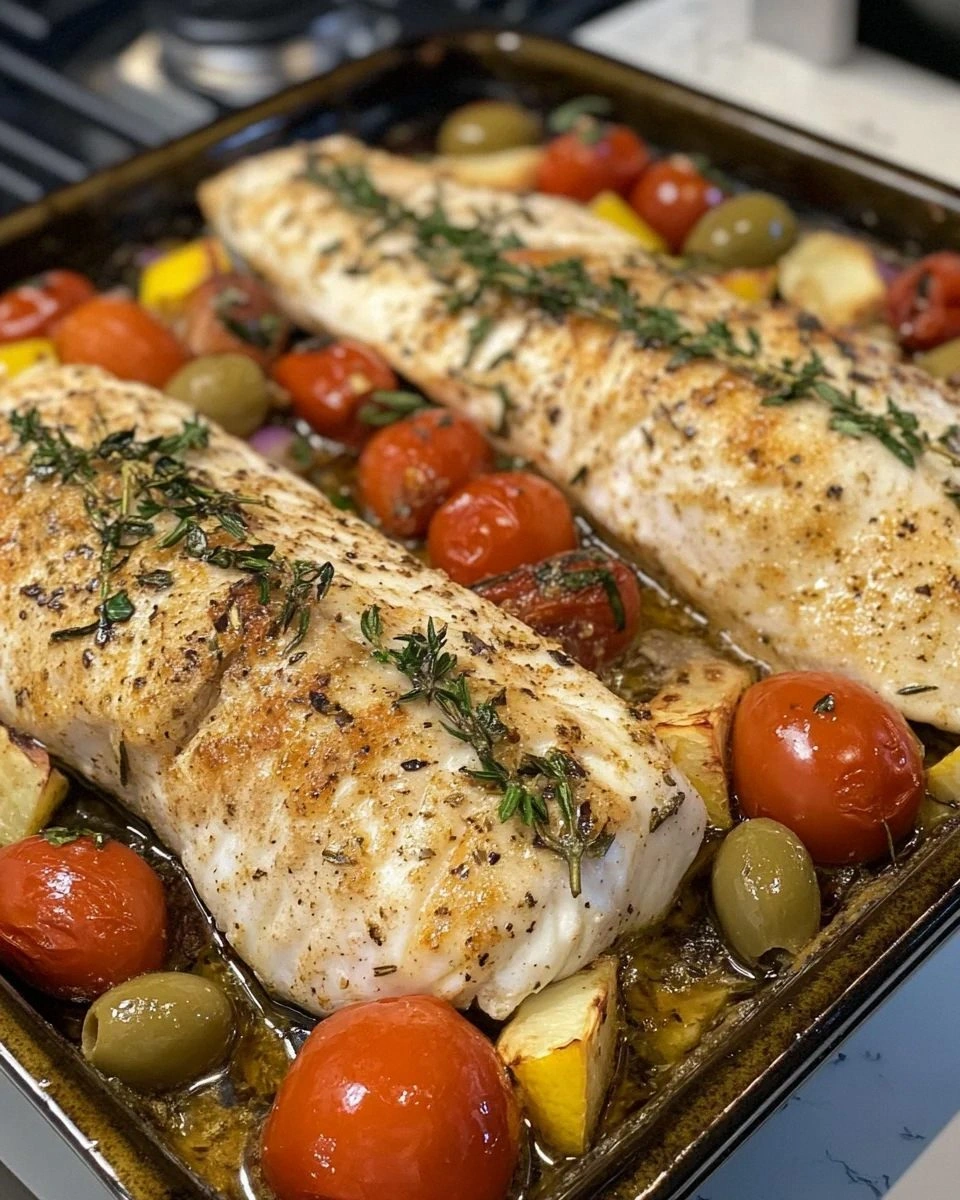
Picture this: tender white fish that flakes apart at the mere suggestion of a fork, infused with the bright, briny essence of olives and capers, kissed by lemon and herbs that transport you straight to a seaside taverna. The magic happens when everything bakes together — the vegetables release their sweet juices, the fish soaks up all those incredible flavors, and your kitchen fills with aromas that'll have your neighbors wondering what five-star restaurant just opened next door. I'm talking about that intoxicating blend of garlic sizzling in olive oil, the herbal perfume of oregano and basil dancing through the air, and that unmistakable Mediterranean character that makes you want to book a flight to the Greek islands immediately.
Here's what separates this recipe from every other mediocre baked fish attempt you've suffered through: we're building layers of flavor that actually penetrate the fish, not just sitting on top like an afterthought. Most recipes get this completely wrong — they throw everything together and hope for the best, ending up with fish that tastes like, well, fish with some stuff on it. But when you follow my method, each bite tells a story of sun-ripened tomatoes, aromatic herbs, and that perfect balance of acid and richness that makes Mediterranean cuisine so addictive. I dare you to taste this and not go back for seconds. Actually, I dare you to taste this and not immediately start planning your next dinner party just to show off.
The best part? This isn't some complicated restaurant technique that requires culinary school training and equipment you can't pronounce. We're talking about a sheet pan, some fresh ingredients, and about fifteen minutes of actual hands-on time. The oven does most of the heavy lifting while you pour yourself a glass of wine and pretend you're on a Mediterranean vacation. Okay, ready for the game-changer? Let me walk you through every single step — by the end, you'll wonder how you ever made it any other way.
What Makes This Version Stand Out
Flavor Bomb: We're not just sprinkling herbs on top and calling it a day. This recipe creates a marinade that actually penetrates the fish, infusing every bite with that authentic Mediterranean character you thought you could only get at a seaside restaurant. The combination of lemon juice, olive oil, and garlic creates a flavor base that transforms ordinary white fish into something extraordinary.
Texture Perfection: Most baked fish recipes leave you with dry, chalky protein that requires a gallon of water to wash down. Not this one. The vegetables create a natural steaming effect that keeps the fish incredibly moist while the high-heat finish gives you those gorgeous golden edges that shatter like thin ice when you bite into them.
One-Pan Wonder: Everything bakes together on a single sheet pan, which means fewer dishes and more time to enjoy that second glass of wine. The vegetables cook in the same flavorful juices as the fish, creating a complete meal that tastes like you spent hours in the kitchen when you really just threw everything together and let the oven work its magic.
Weeknight Friendly: From fridge to table in under 45 minutes, this recipe respects your busy schedule while delivering restaurant-quality results. Most of that time is hands-off baking, giving you space to help with homework, catch up on emails, or perfect your Greek island vacation itinerary.
Crowd-Pleasing Power: I've served this to picky kids, skeptical teenagers, and that one friend who claims to hate fish, and every single person has asked for the recipe. The flavors are familiar enough to comfort but exciting enough to impress, making it perfect for everything from casual family dinners to fancy date nights.
Make-Ahead Magic: The entire dish can be prepped up to the baking step and kept in the refrigerator for up to eight hours. This means you can assemble everything before work and come home to a meal that just needs to hit the oven — no more sad desk lunch while dreaming of Mediterranean dinners.
Why Your Nose Knows Best
Forget everything you've been told about exact cooking times — your nose is the most reliable timer you own. When the garlic in the marinade hits that sweet spot between raw and burnt, your kitchen will fill with an aroma that's almost intoxicating. That's your signal that the fish is probably done or very close to it. The tomatoes should smell concentrated and slightly caramelized, not like fresh produce anymore. If your kitchen doesn't smell like a Mediterranean taverna by the time this comes out of the oven, something has gone terribly wrong and you should probably check your oven temperature.
The 5-Minute Rest That Changes Everything
I know you're hungry, and I know that pan smells incredible, but for the love of all that is holy, let the fish rest before serving. This isn't just restaurant snobbery — it's science. During those five minutes, the proteins finish setting, the juices redistribute throughout the fillets, and the sauce thickens to the perfect consistency. Cut into it too early and all the flavorful juices run out onto the plate, leaving you with dry fish and a puddle of disappointment. Use this time to set the table, pour the wine, or just stand there inhaling the incredible aromas while building anticipation for what's about to happen to your taste buds.
The Lemon Zest Secret
Here's where most recipes miss the boat entirely — they use lemon juice for brightness but completely ignore the zest, which contains all the essential oils that make lemon taste like sunshine. Add half the zest to the marinade and reserve the other half to sprinkle on right before serving. This creates layers of lemon flavor that develop throughout the cooking process, with the cooked zest providing deep citrus notes while the fresh zest adds bright top notes that make the whole dish sing. It's like the difference between a one-note pop song and a symphony — both are music, but only one gives you goosebumps.
The Olive Oil Finale
That bottle of good olive oil you bought? Save some for the very end. Right before serving, drizzle a bit of fresh, uncooked olive oil over everything. This adds a fruity, peppery note that cooked oil just can't deliver. It's a trick I learned from a Greek grandmother who swore by the power of raw olive oil to finish dishes, and she was absolutely right. The contrast between the cooked and raw oil creates complexity that makes people ask what makes your Mediterranean food taste so authentic.
Creative Twists and Variations
This recipe is a playground. Here are some of my favorite ways to switch things up:
The Spanish Coast Variation
Swap the oregano for smoked paprika and add a handful of sliced Spanish chorizo to the vegetable mix. The paprika gives everything a gorgeous rust color and deep, smoky flavor, while the chorizo releases its spicy oils into the sauce. Add some sliced bell peppers and substitute sherry vinegar for the lemon juice. This version tastes like tapas on the Costa del Sol and pairs beautifully with a crisp Albariño wine.
The Italian Riviera Remix
Replace the oregano with fresh basil and add some sliced zucchini and yellow squash to the vegetable medley. Swap the kalamata olives for smaller, more delicate niçoise olives, and add a handful of pine nuts during the last five minutes of cooking for crunch. Finish with fresh mozzarella scattered over the top during the rest period, letting it melt into creamy pools throughout the sauce.
The North African Spice Route
Add a teaspoon each of ground cumin and coriander to the marinade, along with a pinch of harissa paste for heat. Include some sliced preserved lemon peel with the vegetables, and finish with fresh cilantro instead of parsley. The warm spices transform the dish completely, creating an exotic variation that still maintains that Mediterranean soul.
The Provençal Garden Party
Add some thinly sliced fennel bulb and herbes de Provence to the vegetable mixture, and swap the white wine for pastis if you're feeling adventurous. The fennel becomes meltingly tender and adds a subtle anise flavor that pairs beautifully with the fish. Include some cherry tomatoes in different colors for visual appeal, and finish with a few drops of good-quality lavender honey for that authentic Provençal touch.
The Coastal Greek Taverna
Add some thinly sliced red onion and a handful of crumbled feta cheese during the last five minutes of cooking. Include some fresh dill along with the parsley, and add a splash of ouzo to the marinade for that unmistakable Greek flavor. Serve with warm pita bread on the side for scooping up all those incredible juices.
The Clean-Out-The-Fridge Version
I've made this with everything from asparagus to zucchini, and it always works. The key is cutting vegetables to similar sizes so they cook evenly. Cherry tomatoes are non-negotiable for creating that essential sauce, but everything else is fair game. I've used green beans, bell peppers, even broccoli florets — just adjust the cooking time accordingly. This flexibility makes it perfect for using up that produce drawer before your next grocery run.
Storing and Bringing It Back to Life
Fridge Storage
Let the fish cool completely before storing in an airtight container — warm fish in a sealed container creates condensation that ruins the texture. Store the fish and vegetables together with all their juices; this keeps everything moist and flavorful. Properly stored, it'll keep for up to three days in the refrigerator, though honestly, I've never seen it last more than one day in my house. The flavors actually meld and improve overnight, making leftovers something to look forward to rather than tolerate.
Freezer Friendly
While you can freeze the cooked fish, I don't recommend it — the texture suffers significantly when thawed. If you must freeze, wrap individual portions tightly in plastic wrap, then in foil, and use within one month. Thaw overnight in the refrigerator and reheat gently with a splash of water or white wine to restore some moisture. Honestly, though, this dish is so quick to make fresh that freezing seems like more trouble than it's worth.
Best Reheating Method
Forget the microwave — it'll turn your beautiful fish into rubber faster than you can say "Mediterranean." Instead, place the fish and vegetables in a covered baking dish with a splash of water or white wine, and reheat at 300°F for about 10 minutes. Add a tiny splash of water before reheating — it steams back to perfection. The gentle heat and steam restore the original texture without overcooking. If you're in a hurry, a covered skillet over low heat works too — just add a bit of liquid and let it steam until warmed through.