I remember the night I tried to make a comforting beef stew, only to end up with a dish that tasted like burnt rubber and regret. I was in a rush, the clock ticking, and the pot was already a mess of browned bits. The result was a soggy, flavorless bowl that made me question my culinary prowess. That disaster became the spark that lit my quest for a fall‑apart beef that could melt in your mouth and still have that punch of flavor. I dared myself to find the perfect balance of sweet, savory, and tangy.
The aroma that filled my kitchen when I finally got the sauce simmering was like a warm hug from a distant relative. The deep, caramelized notes of the onions danced with the sharp bite of balsamic vinegar, creating a symphony that made my taste buds do the tango. The beef, once seared to a golden crust, surrendered into a tender melt that practically fell apart with the slightest tug. I could hear the sizzle as the glaze thickened, a comforting crackle that whispered promises of comfort. The texture was a paradox of chewy meat and silky sauce that clung to every forkful.
What sets this version apart is the intentional layering of flavors and the use of cranberries to cut through the richness. Unlike the standard slow‑cooked beef, this recipe introduces a bright, tart glaze that lifts the heaviness of the meat. The result is a dish that feels luxurious yet approachable, a true crowd‑pleaser for family dinners or holiday gatherings. I’ve spent hours tweaking the ratio of vinegar to broth to achieve that perfect balance of sweet and acidity. The final product is a single pot marvel that feels like a gourmet experience without the fuss.
And the kicker? I discovered that a splash of honey and a spoonful of Dijon mustard in the glaze can turn a simple beef roast into an unforgettable centerpiece. The honey adds a caramelized sheen while the mustard injects a subtle earthiness that keeps the sauce from becoming cloying. Picture yourself pulling this out of the oven, the kitchen smelling like a wintry orchard, the meat glistening with a glossy cranberry glaze. The dish is so compelling that I dare you to taste this and not go back for seconds. Let me walk you through every single step — by the end, you'll wonder how you ever made it any other way.
What Makes This Version Stand Out
- Flavor Depth: The marriage of balsamic vinegar, beef broth, and cranberry sauce creates a complex palate that evolves with every bite. The acidity cuts through the fat, while the sweet notes linger long after the first mouthful. This depth elevates a humble roast into a dish that feels both comforting and sophisticated.
- Texture Mastery: Slow‑cooking at the right temperature ensures the meat becomes fall‑apart tender, yet still retains a slight chew that adds substance. The glaze thickens to a glossy coating that clings to the meat without becoming sticky. The result is a satisfying contrast between silky sauce and robust beef.
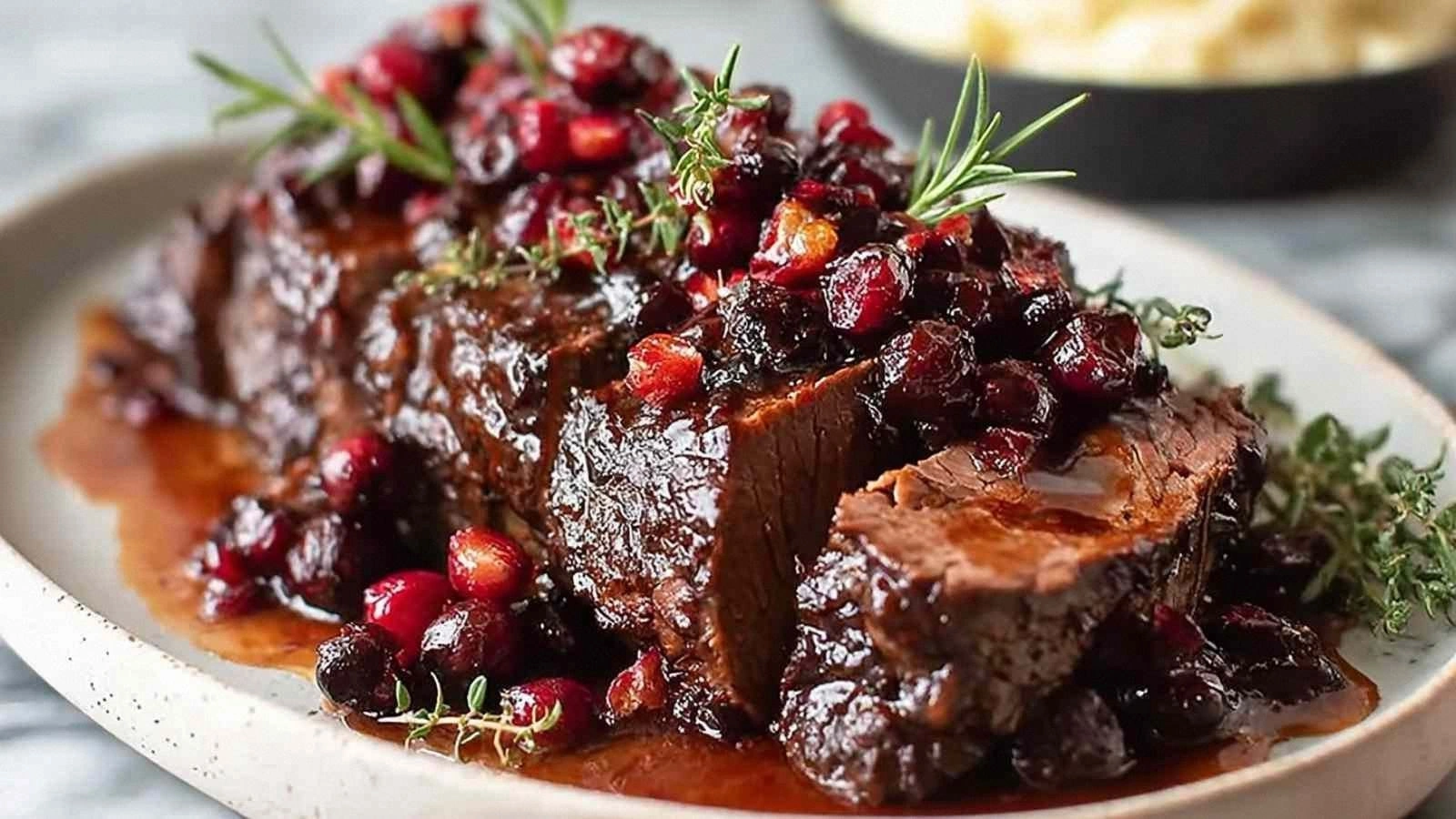
- Visual Appeal: The glossy cranberry glaze gives the roast a striking ruby sheen that makes the dish Instagram‑ready. The caramelized edges of the meat add a rustic charm that feels both elegant and approachable. When plated, the colors pop, inviting you to dig in.
- Time Efficiency: While it’s a slow‑cooked dish, the hands‑off nature means you can set it and forget it. A single pot eliminates the need for constant stirring or multiple pans. The result is a week‑night dinner that feels like a culinary masterpiece.
- Ingredient Flexibility: The recipe works beautifully with either chuck roast or brisket, allowing you to choose based on availability or personal preference. The use of fresh herbs can be swapped between rosemary and thyme without compromising flavor. This flexibility makes it a go‑to for any pantry.
- Make‑Ahead Potential: The dish tastes even better the next day, making it a perfect make‑ahead for busy schedules. The glaze can be reheated and refreshed with a splash of broth to maintain its silky texture. This makes it ideal for potlucks or family gatherings.
- Health‑Friendly Twist: By using lean cuts and balancing the sugars with a touch of honey, the dish stays hearty yet not overly indulgent. The addition of cranberries adds antioxidants and a burst of vitamin C. It’s a dish that satisfies both the soul and the body.
- Audience Impact: Guests often remark that the dish feels like a holiday special, even when served during the week. The dramatic glaze and melt‑in‑your‑mouth texture create a wow factor that impresses even the most skeptical diners. It's a recipe that turns ordinary dinners into memorable moments.
Alright, let's break down exactly what goes into this masterpiece...
Inside the Ingredient List
The Flavor Base
The beef itself is the foundation of this dish; a 3‑4 lb chuck roast or brisket provides a robust, fatty profile that becomes tender through low‑temperature cooking. Seasoning it generously with salt and pepper before searing unlocks its natural umami. Skipping the seasoning step will leave the meat bland and the sauce unbalanced, as the salt helps marry the glaze’s acidity. For a leaner option, trim excess fat before cooking, but keep at least a 1/4 inch layer to maintain moisture.
The Texture Crew
Olive oil is the medium that creates a caramelized exterior on the roast; it also carries the onion and garlic flavors into the broth. If you’re short on olive oil, a neutral oil like canola works, but you’ll miss the subtle fruity undertones. A splash of beef broth adds moisture, preventing the meat from drying out and forming a silky base for the glaze. Cutting the onion into thick wedges instead of fine dice can add a pleasant bite and visual interest.
The Unexpected Star
Whole cranberry sauce or preserves are the secret agents that introduce a tart, sweet burst that cuts through the richness. The cranberries also add a pop of color that makes the dish visually striking. If you prefer a fruitless version, replace the cranberries with pomegranate seeds or dried cherries for a similar texture and acidity. The key is to use a sauce with natural sugars so the glaze doesn’t become overly sweet.
The Final Flourish
Honey or brown sugar introduces a caramelized sweetness that balances the acidity of the balsamic and cranberries. A tablespoon of Dijon mustard adds a subtle peppery bite that keeps the glaze from feeling flat. Fresh rosemary or thyme infuses the dish with aromatic oils that complement the beef’s richness. Skipping the herbs will result in a flatter flavor profile, so don’t be tempted to leave them out for convenience.
Everything's prepped? Good. Let's get into the real action...
The Method — Step by Step
- Preheat the oven to 275°F (135°C). Pat the beef dry with paper towels, then season generously with salt and pepper on all sides. This simple step ensures the meat will develop a caramelized crust during the searing process. While the oven warms, gather your ingredients so everything is within arm’s reach. The anticipation of a slow‑cook masterpiece builds as the kitchen warms up.
- Seared to Perfection. Heat a cast‑iron skillet over high heat and add 2 tablespoons of olive oil. Once the oil shimmers, place the roast in the pan and sear each side until a dark, golden crust forms, about 3–4 minutes per side. This creates a flavorful barrier that locks in juices. Watch the surface; when it turns a deep mahogany, you know the sear is ready. A good sear is the secret to a mouth‑watering finish.
- Sauté Aromatics. Remove the beef from the skillet, reserving the drippings. Add a finely diced onion to the same pan and sauté until translucent, about 5 minutes. Toss in 4 minced garlic cloves and cook for an additional 30 seconds until fragrant. The aromatics will form the flavor base for the glaze. Keep the heat moderate to avoid burning the garlic.
- Deglaze with Balsamic. Pour 1 cup of balsamic vinegar into the skillet, scraping up the browned bits with a wooden spoon. Let the vinegar reduce for 2 minutes, allowing the alcohol to evaporate and the sweetness to concentrate. This reduction thickens the glaze and deepens the flavor profile. The pan should smell like a warm, sweet orchard, signaling that the base is ready.
- Build the Sauce. Stir in 1 cup of beef broth, 2 tablespoons of honey (or brown sugar), and 1 tablespoon of Dijon mustard. Add 1–2 sprigs of fresh rosemary or thyme. Bring the mixture to a gentle simmer, letting the flavors meld for 3 minutes. The broth adds moisture, the honey balances acidity, and the mustard gives a subtle kick. This is where the sauce starts to coat the meat beautifully.
- Return the Roast. Place the seared beef back into the skillet or a baking dish. Pour the reduced sauce over the meat, ensuring it’s well coated. Add 1 cup of whole cranberry sauce or preserves, spooning it evenly across the surface. The cranberries will caramelize and thicken the glaze as it cooks. This step is crucial for achieving that glossy finish.
- Bake Low and Slow. Transfer the skillet or baking dish to the preheated oven. Cook for 3–4 hours, or until the beef is fork‑tender and the glaze has thickened to a glossy sheen. Check the roast at the 2‑hour mark, gently lifting the meat to ensure even cooking. The slow temperature allows collagen to break down, yielding the signature fall‑apart texture. The aroma that fills the kitchen at this point is irresistible.
- Rest and Serve. Remove the roast from the oven and let it rest for 15 minutes before slicing. This allows the juices to redistribute, ensuring every bite is juicy. While the meat rests, skim any excess fat from the glaze and reduce it on the stovetop if desired. Slice the beef against the grain for maximum tenderness. Plate with a drizzle of the remaining glaze and garnish with fresh herbs for a finishing touch.
That's it — you did it. But hold on, I've got a few more tricks that'll take this to another level...
Insider Tricks for Flawless Results
The Temperature Rule Nobody Follows
Many cooks set their oven to 300°F, assuming a higher temperature will speed things up. In reality, a lower temperature of 275°F allows the connective tissue to break down slowly, preventing the meat from becoming tough. I once tried 350°F and ended up with a rubbery roast that didn't melt. The gentle heat preserves the natural juices and keeps the glaze from burning.
Why Your Nose Knows Best
A seasoned cook knows that the scent of simmering balsamic and cranberries is the real indicator of readiness. If the glaze is thick and fragrant, the meat is almost done. Trusting your nose over a timer can save you from overcooking. I’ve learned to pause and sniff, and it’s a game changer.
The 5‑Minute Rest That Changes Everything
Letting the roast rest for 15 minutes is essential, but a quick 5‑minute rest after slicing can help the juices redistribute even more. This is especially useful when serving a large group. The meat stays moist and the glaze adheres better, giving a polished finish.
Avoiding the “Burnt Glaze” Trap
The glaze can scorch if left unattended for too long. Keep the heat on medium and stir occasionally, especially when the sauce has reduced to a thick syrup. A quick stir prevents the sugars from burning and keeps the flavor bright.
The Herb Swap Trick
If you’re out of rosemary or thyme, sage or marjoram can work as a substitute, offering a slightly different aromatic profile. The key is to use herbs with a strong flavor that can stand up to the beef. I’ve used sage in a previous batch and the result was surprisingly fresh.
The Final Glaze Polish
Just before serving, whisk in a teaspoon of cold butter to the glaze. The butter adds a silky sheen and a subtle richness that elevates the sauce. It also helps the glaze cling to the meat, giving that glossy, restaurant‑style finish. A quick swirl of butter is all it takes to wow your guests.
Creative Twists and Variations
This recipe is a playground. Here are some of my favorite ways to switch things up:
Maple‑Infused Beef
Swap the honey for a splash of pure maple syrup. The maple adds a subtle caramel note that pairs wonderfully with the cranberries. The result is a sweet, savory dish that feels like a holiday dessert. This variation works best during the fall and winter months.
Spicy Red Wine Glaze
Replace the balsamic vinegar with a rich red wine and add a pinch of crushed red pepper flakes. The wine deepens the flavor while the heat adds a pleasant kick. Serve with a side of roasted root vegetables for a complete meal.
Vegetarian Version
Use a hearty vegetable like seared portobello mushrooms or a thick slice of seared eggplant instead of beef. The mushroom’s umami will mimic the depth of the original dish. Finish with the same glaze for a plant‑based twist.
Cranberry‑Pomegranate Fusion
Combine cranberry sauce with pomegranate molasses for a complex, tart glaze. The pomegranate adds a subtle bitterness that balances the sweetness. This version is perfect for those who love a fruit‑rich sauce with a hint of depth.
Herb‑Infused Roast
Add a bouquet garni of thyme, bay leaf, and a sprig of sage to the broth. This infusion creates a fragrant, layered flavor that elevates the dish. The herbs can be removed before serving to avoid a bitter bite.
Storing and Bringing It Back to Life
Fridge Storage
Cool the roast completely before placing it in an airtight container. Store in the refrigerator for up to 4 days. When ready to serve, reheat gently on the stovetop, adding a splash of beef broth to keep it moist. The glaze will thicken slightly upon cooling, so a quick stir restores its glossy finish.
Freezer Friendly
Wrap the cooked roast tightly in foil and place it in a freezer bag. It will keep for up to 3 months without loss of flavor. Thaw overnight in the refrigerator before reheating. The meat remains tender, and the glaze retains its vibrant color.
Best Reheating Method
Reheat the roast in a low‑heat oven at 300°F, covering it with foil to prevent drying. Add a small splash of water or broth to create steam, which keeps the meat moist. Finish with a quick glaze reduction on the stovetop to refresh the sauce’s sheen.