I remember the night I almost turned my kitchen into a crime scene. The cod I had bought had been a little too dry, the garlic was crushed into a mush, and the lemon was forgotten in the back of the fridge. I stared at the pan, feeling the heat of my own disappointment. Then I imagined a buttery, citrusy hug for my fish and decided to rewrite the whole recipe from scratch. That moment was the spark that turned a sad dinner into a culinary revelation.
Picture the aroma that floods the kitchen as the butter starts to foam and the garlic slices begin to sing. The sizzling sound is like a tiny applause, a promise that something delicious is about to happen. The bright green parsley and the golden lemon zest paint a picture on the plate, while the gentle steam carries the scent of citrus and herbs. The texture is a contrast: the fish’s flaky flesh against the silky sauce, a harmony that feels like a well‑orchestrated concert.
What makes this version stand out isn’t just the ingredients; it’s the way each element is treated. I’ve cut out the unnecessary steps, kept the cooking time short, and added a touch of wine for depth that most recipes skip. The result is a dish that feels like a luxury meal but can be whipped up in a fraction of the time. I dare you to taste this and not go back for seconds. Trust me, once you’ve had it, you’ll wonder how you ever made cod any other way.
Let me walk you through every single step — by the end, you’ll wonder how you ever made it any other way. From selecting the freshest fillets to finishing with a burst of parsley, every detail matters. And if you’re ready for a game‑changer, stay tuned; I’ve got a technique that will elevate your sauce to silky perfection.
What Makes This Version Stand Out
- Flavor: The lemon and garlic pair like a dynamic duo, brightening the cod without overpowering it. The subtle wine note adds a velvety depth that feels restaurant‑level.
- Texture: The cod stays moist and flaky, thanks to a quick sear and a buttery glaze that coats the fish like velvet.
- Speed: From prep to plate, the entire dish takes under 45 minutes. Perfect for those nights when you need something impressive yet quick.
- Simplicity: Only nine core ingredients. No hidden pantry mysteries, just clear, honest flavors.
- Versatility: Works beautifully with rice, quinoa, or a crisp green salad. Swap the cod for salmon or halibut and the magic stays.
- Make‑Ahead Friendly: The sauce can be made ahead and reheated gently, retaining its buttery richness.
- Crowd‑Pleaser: The bright citrus and garlic make it a hit at dinner parties or family meals alike.
Alright, let's break down exactly what goes into this masterpiece…
Inside the Ingredient List
The Flavor Base
Olive oil is the first thing that hits your pan. It creates a slick surface that prevents the cod from sticking and gives the butter a subtle fruity note. If you’re allergic to olive oil, a neutral oil like grapeseed works just as well. Skipping it will make the sauce cling to the fish instead of coating it.
Butter is the heart of the sauce. It melts into a glossy, golden liquid that envelopes the cod. A tablespoon of butter for every two fillets is the sweet spot; too little and you lose that silky mouthfeel, too much and the dish becomes greasy.
Garlic is the aromatic engine. Fresh cloves, minced or sliced, release their oils into the butter, creating a fragrant base. If you’re a garlic purist, crush the cloves instead of slicing; it releases more essential oils. Omitting garlic turns the dish into a plain lemon butter, which is still good but loses that punch.
The Citrus Boost
Lemon zest is the bright spark that cuts through the richness of butter. It adds a citrusy aroma that lingers on the tongue. If you can’t find fresh lemons, a tablespoon of lemon zest from a frozen pack works, but fresh is best.
Lemon juice provides the tangy counterbalance. It balances the buttery richness and adds a bright finish. Use freshly squeezed juice for maximum freshness; bottled lemon juice is fine if you’re in a hurry.
The Unexpected Star
A splash of white wine (about a quarter cup) deglazes the pan, lifting the browned bits that carry flavor. The wine’s acidity also brightens the sauce. If you’re avoiding alcohol, replace it with a splash of chicken broth or water.
The Final Flourish
Fresh parsley is the finishing touch. It adds a pop of color and a fresh herbal note that cuts through the butter. If parsley isn’t on hand, dill or cilantro can be used for a different herbal profile.
Capers add a briny bite that contrasts the sweet lemon. They’re optional but highly recommended for an extra layer of flavor. If you’re allergic or just don’t like them, you can omit them without ruining the dish.
Everything’s prepped? Good. Let’s get into the real action…
The Method — Step by Step
- Prep the fillets: Pat the cod dry with paper towels. Season both sides with salt and pepper. This simple step ensures the fish sears nicely and doesn’t stick to the pan. I’ve found that a light dusting of salt also draws out moisture, keeping the fillets juicy.
- Heat the pan: Place a large non‑stick skillet over medium‑high heat. Add the olive oil and let it shimmer. This creates a slick surface that prevents the fish from sticking and gives the butter a subtle fruity note.
- Start the garlic: Add the minced garlic to the pan. Let it sizzle for 30 seconds until fragrant, but watch it closely so it doesn’t burn. Burnt garlic tastes bitter, which would ruin the bright citrus flavor. This is where the aroma kicks in, and you’ll know the dish is heating up.
- Cook the cod: Lay the fillets skin‑side down (if they have skin) into the pan. Sear for 3–4 minutes on the first side until golden brown. Flip gently and sear the other side for another 2–3 minutes. The edges should pull away from the pan, indicating a crisp crust.
- Introduce the butter: Lower the heat to medium. Add the butter, lemon zest, and a splash of white wine. Let the butter melt and the wine deglaze the pan, scraping up all the browned bits. This creates a flavorful base for the sauce. The sauce should have a silky sheen.
- Finish the sauce: Stir in the lemon juice, capers, and a pinch of red pepper flakes. Simmer for 1–2 minutes, letting the flavors meld. The sauce should thicken slightly and coat the back of a spoon. This is the moment of truth—your sauce is ready to shine.
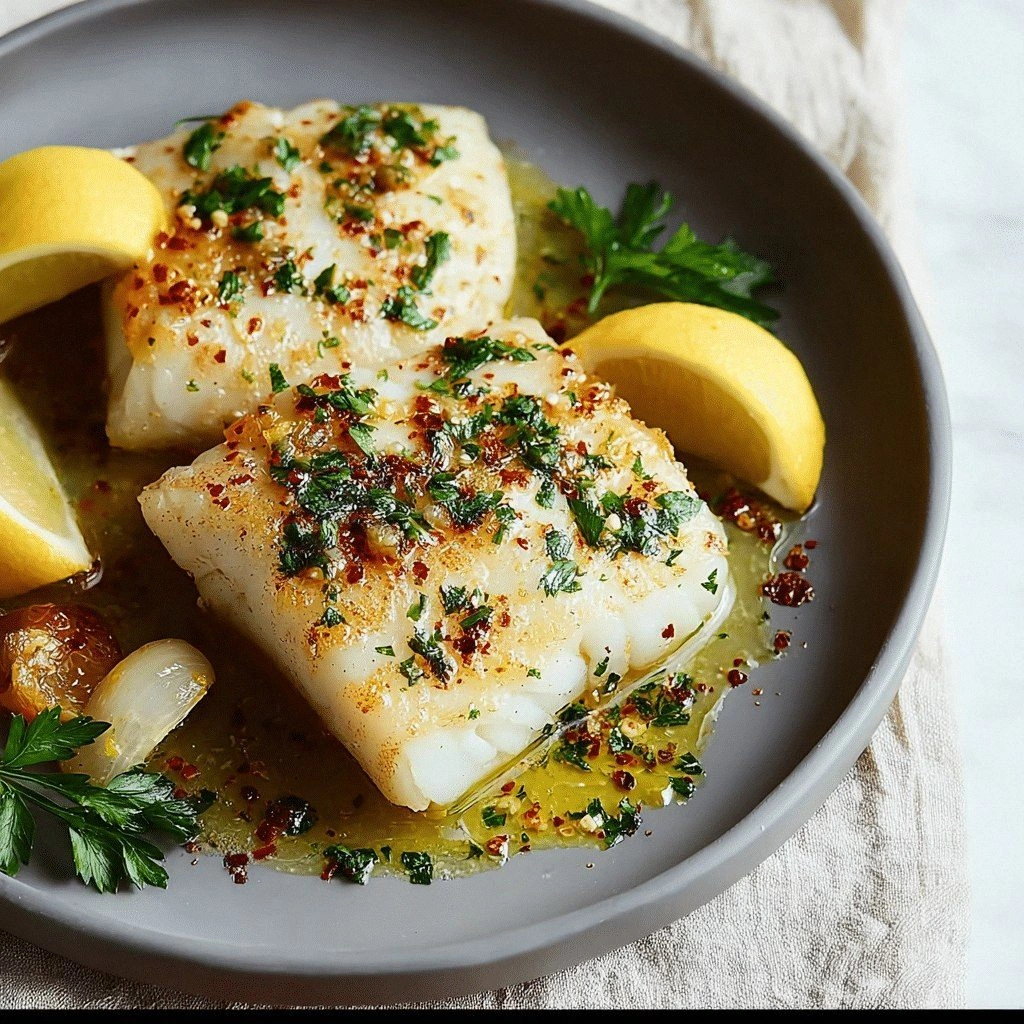
- Plate the cod: Transfer the fillets to a serving plate. Spoon the buttery lemon sauce over them. The sauce should coat the fish like a glossy blanket. Garnish with fresh parsley and a lemon wedge for a pop of color.
- Serve immediately: The dish is best served hot, so the buttery sauce remains silky. Pair with steamed asparagus or a light salad for a balanced meal. If you’re hosting, the aroma alone will draw guests to your table.
That’s it — you did it. But hold on, I’ve got a few more tricks that will take this to another level. These insider tips will help you avoid common pitfalls and elevate your dish from good to unforgettable.
Insider Tricks for Flawless Results
The Temperature Rule Nobody Follows
Cooking cod at the right temperature is critical. If the pan is too hot, the fish will stick and overcook on the outside while staying raw inside. I recommend a medium‑high heat, then lowering to medium when you add butter. This keeps the fish from searing too aggressively and preserves its delicate texture.
Why Your Nose Knows Best
Before you start, sniff the garlic. Fresh garlic should have a sharp, clean scent. If it smells flat or has a musty undertone, it’s past its prime. Using fresh garlic ensures the sauce has that punchy, aromatic base that defines this dish.
The 5‑Minute Rest That Changes Everything
After searing, let the fillets rest on a warm plate for 5 minutes before serving. This allows the juices to redistribute, keeping the fish moist and tender. I’ve seen people serve right away and end up with a dry center; the rest trick saves the day.
Use a Skillet with a Lid
Covering the pan with a lid during the last 2 minutes of cooking traps steam, helping the cod cook evenly. It also helps the sauce thicken without having to reduce it on the stove, saving time and effort.
The Lemon‑Garlic Ratio
If you’re a citrus lover, feel free to increase the lemon juice to 3 tablespoons. It will make the sauce more tart, but keep the butter quantity the same to avoid a thin sauce. This tweak is perfect for those who like a zesty kick.
Don’t Skip the Salt
Salt is the flavor enhancer that brings everything together. Even a small pinch can make a huge difference. I’ve seen recipes that skip it, and the result is bland. Don’t be shy; a light sprinkle is all you need.
Now that you’ve mastered the basics, it’s time to explore creative variations that will keep this dish fresh and exciting.
Creative Twists and Variations
This recipe is a playground. Here are some of my favorite ways to switch things up:
Spicy Sriracha Surprise
Add a teaspoon of sriracha to the sauce for a spicy kick. The heat pairs beautifully with the buttery base and bright lemon. Great for those who love a little heat in their seafood.
Herb‑Infused Olive Oil
Replace the olive oil with a herb‑infused olive oil (rosemary or thyme). This adds a subtle woodsy flavor that complements the lemon. It’s a simple swap that elevates the dish.
Miso‑Glazed Cod
Stir a tablespoon of white miso into the sauce for a umami boost. The miso adds depth and a slightly sweet undertone. It’s a great way to add complexity without extra steps.
Citrus‑Coconut Twist
Swap the butter for coconut milk and add a splash of lime juice. The creamy coconut pairs with the citrus for a tropical feel. Serve over jasmine rice for a beach‑inspired meal.
Garlic Parmesan Crust
After searing, sprinkle grated Parmesan and a pinch of garlic powder over the fillets. Finish them in the oven for 3 minutes. The crust adds a nutty crunch that contrasts the buttery sauce.
Pesto‑Pesto Fusion
Swirl a spoonful of basil pesto into the sauce right before serving. The herbaceous freshness complements the lemon and garlic, creating a vibrant, multi‑layered flavor profile.
Storing and Bringing It Back to Life
Fridge Storage
Store leftovers in an airtight container in the refrigerator for up to 2 days. Keep the sauce separate from the fish to prevent the cod from absorbing excess moisture.
Freezer Friendly
Freeze the cooked fillets in a single layer on a parchment‑lined tray before transferring to a freezer bag. They’ll keep for up to 3 months. Reheat gently on the stove with a splash of water to keep them moist.
Best Reheating Method
Reheat in a skillet over low heat, adding a teaspoon of water or broth. The steam keeps the fish tender, while the sauce re‑melts into a silky glaze. Avoid microwaving; it can make the fish rubbery.