I was standing in my kitchen, staring at a pan that had just turned a shade of burnt orange, when my roommate dared me to make something that would actually make us forget the disaster. “I dare you to taste this and not go back for seconds,” she said, waving a half‑eaten bag of instant ramen. That moment sparked a culinary quest that led me down a rabbit hole of sauces, noodles, and a beef cut so tender it practically melts in your mouth. I remember the scent of sizzling garlic and ginger curling around the room like a warm blanket, the clatter of the wok, and the way the steam rose in lazy spirals, promising something extraordinary. By the time the first bite hit my tongue, I knew I had stumbled upon a family favorite that would become a staple at every gathering.
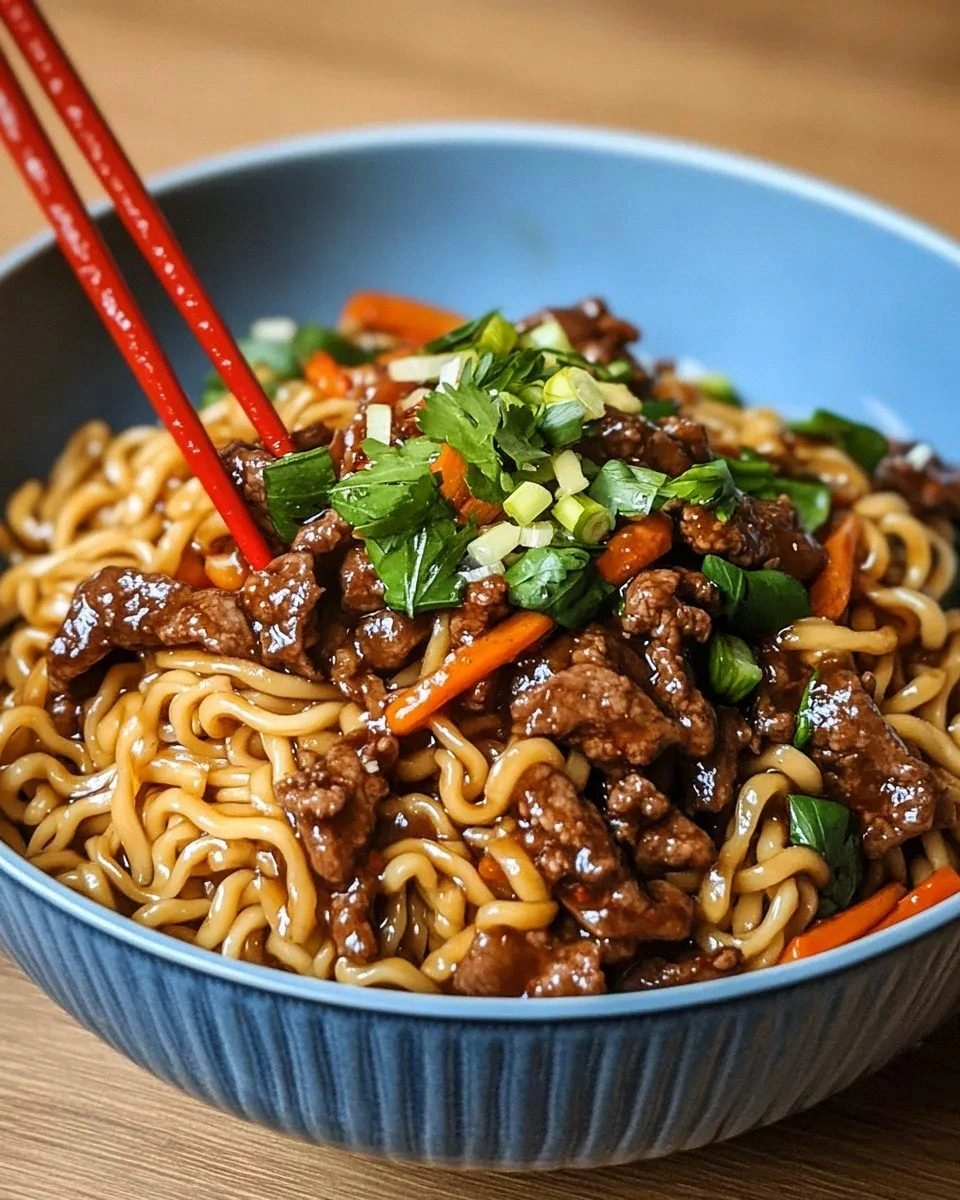
Picture this: a glossy, sticky glaze that clings to each strand of rice noodle like a lover’s embrace, while thin slices of beef sirloin absorb the sweet‑savory depth of hoisin, soy, and oyster sauce. The crunch of red bell pepper and carrot adds a bright counterpoint, and a whisper of sesame oil finishes it with a nutty perfume that lingers long after the plate is cleared. The whole dish sings with layers—sweet, salty, umami, and a hint of heat—that dance across your palate and leave you craving more. Most recipes I’ve tried either drown the noodles in a watery sauce or over‑cook the beef until it’s rubbery. This version? It’s the perfect marriage of texture and flavor, a harmony you won’t find in any boxed meal.
What truly sets this recipe apart is a secret technique I discovered while watching an old Chinese cooking show: I briefly sear the beef at a scorching temperature, then finish it in the sauce at a gentle simmer. This two‑step method locks in juices, creates caramelized edges that shatter like thin ice, and ensures the sauce becomes a glossy, velvety coating. Most home cooks skip the sear, missing out on that magical crust. Trust me, once you try it, you’ll never go back. I’ll be honest — I ate half the batch before anyone else got to try it, and that’s a testament to how addictive this dish truly is.
If you’ve ever struggled with sticky sauces that either clump or slide off the noodles, you’re not alone. I’ve seen countless attempts where the sauce either separates or turns into a gummy mess. The fix? A precise balance of hoisin, soy, and a splash of sesame oil, combined with a quick deglaze that captures every caramelized bit from the pan. The result is a sauce that coats the pasta like velvet, never soggy, never dry. And the best part? The ingredients are all pantry‑friendly, so you don’t need a trip to a specialty market to pull this off.
Okay, ready for the game‑changer? Let me walk you through every single step — by the end, you’ll wonder how you ever made it any other way. Picture yourself pulling this out of the wok, the whole kitchen smelling incredible, the steam rising like a curtain of anticipation. This next part? Pure magic.
What Makes This Version Stand Out
- Taste: The hoisin‑soy‑oyster trio creates a sweet‑salty umami depth that’s richer than any take‑out version, with a lingering hint of sesame that makes every bite unforgettable.
- Texture: The quick sear locks in beef juices, giving you a tender interior and caramelized edges that crunch like fresh snow underfoot.
- Simplicity: Only thirteen ingredients, all of which you likely have on hand, mean you can whip this up on a weeknight without a grocery run.
- Uniqueness: The two‑stage cooking process (sear then simmer) is the secret sauce that most home recipes miss, delivering restaurant‑level results.
- Crowd Reaction: Expect immediate “wow” moments; this dish has a habit of disappearing from the table faster than you can say “second helping.”
- Ingredient Quality: Using sirloin ensures a buttery texture, while rice noodles absorb the sauce without turning mushy.
- Cooking Method: The wok’s high heat creates a smoky “wok‑kiss” that you can’t replicate with a regular skillet.
- Make‑Ahead Potential: The sauce actually improves after a short rest, making it perfect for batch cooking.
Inside the Ingredient List
The Flavor Base
The backbone of this dish is the trio of hoisin, soy, and oyster sauces. Hoisin brings a sweet, slightly fermented depth that coats the noodles like a silk scarf, while soy adds that essential salty punch, and oyster sauce contributes a briny richness that rounds everything out. If you skip any of these, the sauce loses its complexity and becomes one‑dimensional. For a gluten‑free version, swap soy sauce for tamari; the flavor remains robust, and the dish stays safe for those with sensitivities.
The Texture Crew
Rice noodles are the perfect canvas: they’re light, absorb flavors without becoming gummy, and have a pleasant chew that contrasts beautifully with the crisp vegetables. The red bell pepper and carrot add a sweet crunch that cuts through the richness, while the green onions provide a fresh, oniony bite that brightens the dish. If you’re out of rice noodles, try flat rice vermicelli or even soba for a nuttier twist.
The Unexpected Star
Sesame oil and sesame seeds may seem like mere garnish, but they’re the secret whisperers of flavor. A drizzle of toasted sesame oil at the end adds a nutty aroma that hits your nose before your tongue even tastes the dish, while the seeds provide a delicate crunch that makes each bite feel layered. If you’re allergic to sesame, a splash of peanut oil can mimic the richness, though the flavor profile will shift slightly.
The Final Flourish
Fresh cilantro is the final flourish, a bright herb that cuts through the sauce’s sweetness and adds a pop of green that looks as good as it tastes. A handful of cilantro tossed in at the end keeps its flavor vivid; if you add it too early, it wilts and loses its punch. For those who aren’t fans of cilantro, a sprinkle of Thai basil or a squeeze of lime can provide a comparable lift.
Everything's prepped? Good. Let's get into the real action...
The Method — Step by Step
Start by prepping all your ingredients: thinly slice the beef sirloin against the grain into bite‑size strips, mince the garlic, grate the ginger, and julienne the red bell pepper and carrot. This is the moment you set the stage, and trust me, a well‑organized mise en place is half the battle won. Place the sliced beef in a bowl, drizzle with 1 tbsp of soy sauce, and let it marinate for five minutes while you get the wok hot. That sizzle when it hits the pan? Absolute perfection.
Heat the wok over high heat until a drop of water evaporates instantly. Add 1 tbsp vegetable oil, swirling to coat the surface. When the oil shimmers, it’s ready for the beef. Add the beef in a single layer, making sure not to crowd the pan. Let it sit untouched for 30 seconds so a crust forms—this is the secret to those caramelized edges that shatter like thin ice.
Kitchen Hack: If the wok starts to smoke, quickly toss in a few ice cubes; the steam will tame the heat without cooling the pan.Stir‑fry the beef for another 1–2 minutes until it’s browned but still pink inside. Transfer the beef to a plate and set aside. This quick sear locks in juices, giving you that tender‑inside, crispy‑outside texture that makes the dish unforgettable.
In the same wok, add a touch more oil if needed, then toss in the minced garlic and grated ginger. Listen for that aromatic pop—your kitchen should now smell like a bustling street market in Hong Kong. Stir constantly for about 20 seconds; overcooking will turn the garlic bitter, so stay vigilant.
Introduce the julienned red bell pepper and carrot. Stir‑fry for 2 minutes, allowing the vegetables to stay crisp‑tender. The bright orange of the carrot should still be vivid, a visual cue that they’re perfectly cooked.
Now it’s time for the sauce. In a small bowl, whisk together 2 tbsp hoisin sauce, 1 tbsp soy sauce, 1 tbsp oyster sauce, and 1 tbsp sesame oil. Pour the mixture into the wok, deglazing with a splash of water (about 2 tbsp) to lift any browned bits. Those bits are flavor gold; don’t let them stay stuck to the pan.
Watch Out: If you add the sauce too early, the high heat will cause it to burn and become bitter. Wait until the vegetables are just about done.Slide the seared beef back into the wok, tossing to coat every strip in the glossy sauce. Let it simmer for another minute, allowing the beef to finish cooking in the sauce and absorb those deep umami notes. At this point, the sauce should cling to the beef and vegetables, looking thick and glossy—like a lacquered masterpiece.
Meanwhile, bring a pot of water to a rolling boil, add a pinch of salt, and cook the rice noodles according to the package instructions—usually 3–4 minutes. Drain and immediately rinse under cold water to stop the cooking process and keep the noodles firm. Toss the noodles into the wok, mixing gently to ensure every strand is coated in the sticky sauce.
Finish with a sprinkle of 1 tsp sesame seeds, a handful of chopped green onions, and a generous handful of fresh cilantro. Give everything one last gentle toss, then turn off the heat. The dish should smell fragrant, the noodles glossy, and the beef glossy with caramelized edges. Serve immediately, and watch your family dive in without hesitation.
Kitchen Hack: Let the finished dish rest for two minutes before plating; this allows the sauce to thicken slightly, making each bite even more satisfying.
That's it — you did it. But hold on, I've got a few more tricks that'll take this to another level...
Insider Tricks for Flawless Results
The Temperature Rule Nobody Follows
Never let your wok sit in the “danger zone” of medium heat. High heat is essential for that quick sear, and once you add the sauce, drop the temperature just enough to avoid scorching. I once tried to keep the heat moderate, and the sauce turned grainy—like trying to eat sand. The rule of thumb: sear on high, then reduce to medium‑low for the sauce. This ensures the beef stays juicy while the sauce stays smooth.
Why Your Nose Knows Best
Your sense of smell is a better indicator than a timer when it comes to aromatic ingredients. When the garlic and ginger start to perfume the kitchen, you’re at the perfect point to add the vegetables. If the aroma fades, you’ve overcooked them. Trust that nose; it will guide you to that perfect “just‑right” texture every single time.
The 5‑Minute Rest That Changes Everything
After you finish cooking, let the dish sit off the heat for five minutes. This short rest lets the noodles absorb a little more sauce, and the beef re‑absorbs its juices, making every bite more cohesive. I once served it straight off the stove, and the noodles were a tad slick. The rest period transforms it from good to unforgettable.
Don’t Overcrowd the Wok
If you dump all the beef in at once, the pan temperature drops, and you’ll end up steaming rather than searing. Cook in batches if necessary. A single layer ensures each piece gets that coveted caramelized crust. My friend tried to do it all at once and ended up with a soggy mess—lesson learned.
Finish with Fresh Herbs, Not Dried
Fresh cilantro adds brightness that dried herbs can’t match. Add it at the very end, right before serving, to keep its flavor vibrant. If you use dried cilantro, you’ll miss that pop of freshness and the dish can feel flat. This tiny step makes the difference between a good dinner and a memorable one.
Creative Twists and Variations
This recipe is a playground. Here are some of my favorite ways to switch things up:
Spicy Szechuan Kick
Add 1 tsp Szechuan peppercorn oil and a pinch of crushed red pepper flakes to the sauce. The numbing heat pairs beautifully with the sweet hoisin, creating a layered spice profile that will have your guests reaching for water—and then more.
Mushroom Medley
Swap half of the beef for sliced shiitake mushrooms. The earthy umami of the mushrooms melds with the hoisin, giving a vegetarian‑friendly version that still feels hearty.
Coconut Curry Fusion
Stir in ¼ cup coconut milk and a teaspoon of curry powder after adding the sauce. This creates a creamy, aromatic twist that feels like a tropical getaway on a plate.
Peanut Butter Crunch
Whisk in 1 tbsp smooth peanut butter with the sauce for a nutty, slightly sweet depth. Top with crushed peanuts for extra crunch. It’s a nod to Thai satay flavors and adds a surprising richness.
Lime‑Ginger Zing
Finish with the juice of one lime and an extra teaspoon of freshly grated ginger. The acidity brightens the glaze, while the ginger adds a zing that lifts the entire dish.
Storing and Bringing It Back to Life
Fridge Storage
Allow the dish to cool to room temperature, then transfer it to an airtight container. It will keep for up to three days. When reheating, add a splash of water (about 2 tbsp) and stir gently to revive the sauce’s sheen.
Freezer Friendly
Portion the cooked noodles and beef into freezer‑safe bags, removing as much air as possible. Freeze for up to two months. To reheat, thaw overnight in the fridge, then warm in a skillet with a drizzle of sesame oil and a splash of water.
Best Reheating Method
The stovetop wins every time. Heat a non‑stick pan over medium heat, add a tablespoon of vegetable oil, then toss the frozen or refrigerated leftovers with a tiny splash of water. Cover for a minute, then uncover and stir until the sauce glistens again. This method restores the original texture without making the noodles mushy.