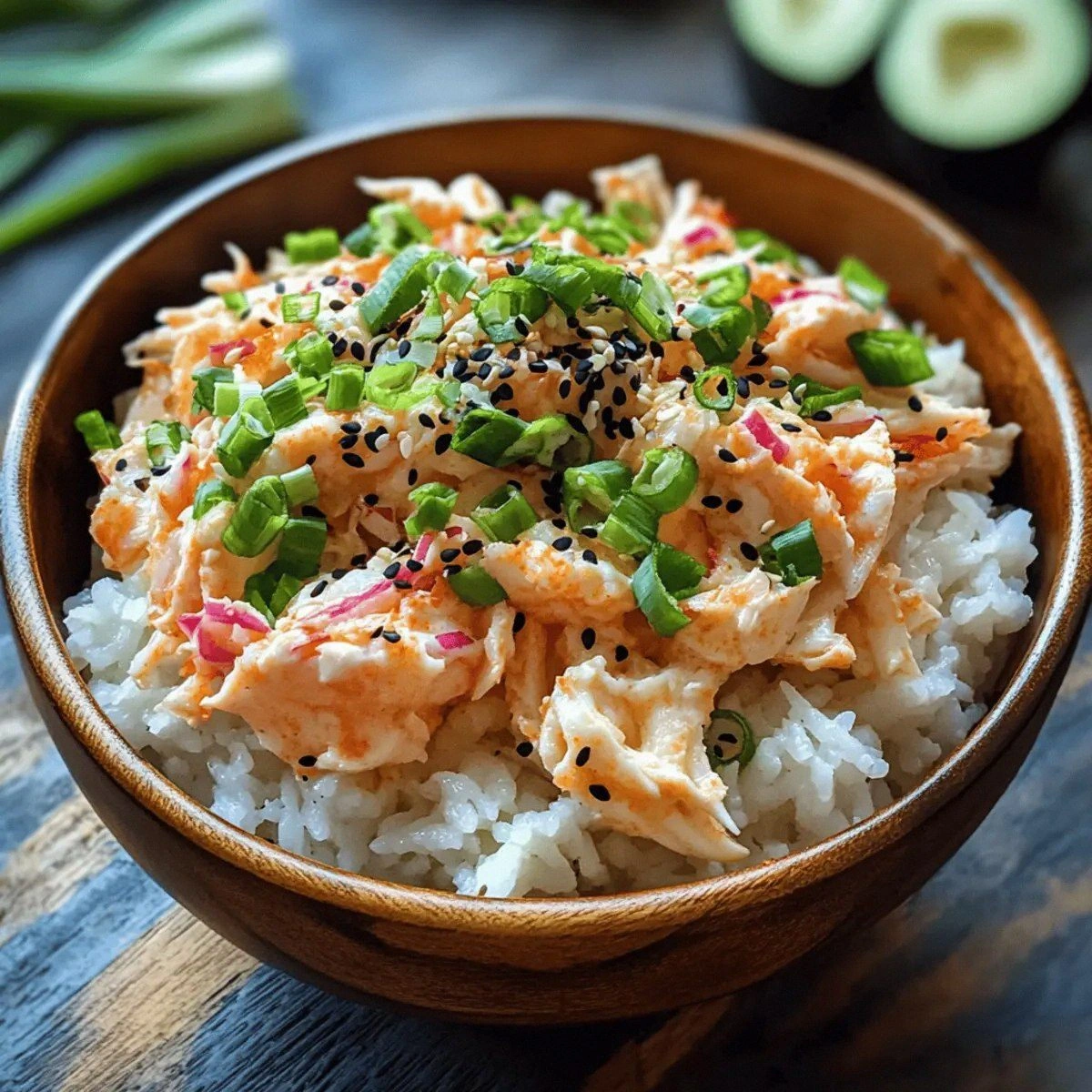
I was in the middle of a frantic weekday dinner scramble when my roommate challenged me: “Make something that feels like sushi, but don’t waste a single minute on rice‑cooking drama.” I laughed, grabbed the nearest bag of imitation crab, and set a timer. Ten minutes later the kitchen smelled like a seaside market, the rice was fluffy, and the sauce was glowing like a sunrise over a Japanese harbor. I dared you to taste this and not go back for seconds, because honestly, I’ll be honest — I ate half the batch before anyone else got a chance to try it. This isn’t just another bowl; it’s a full‑on flavor fireworks show that lands on your tongue before you even realize you’re eating something healthy.
Picture this: a bowl of perfectly seasoned short‑grain rice, each grain glistening like tiny pearls, topped with a cloud of creamy, sriracha‑kissed crab that clings to the spoon like a secret lover. The crunch of sesame seeds crackles under the gentle bite of fresh green onions, while a drizzle of soy sauce adds that umami depth you’d expect from a high‑end sushi bar. You’ll hear the faint sizzle of the rice as it hits the hot pan, the soft thud of the crab mixing with mayo, and the faint pop of sesame seeds as they toast. The whole experience is a symphony of sight, sound, smell, taste, and texture that makes you feel like you’ve just stepped out of a Tokyo izakaya and into your own living room.
Most recipes get this completely wrong. They either overcomplicate the rice, drown the crab in sauce, or skip the crucial finishing touches that turn a simple bowl into a show‑stopping masterpiece. Here’s what actually works: a quick rice rinse that removes excess starch, a precise 1:1.2 water‑to‑rice ratio for that perfect stickiness, and a secret ingredient—Japanese mayo—that adds silkiness without overwhelming the heat. The result? A bowl that’s simultaneously comforting and exhilarating, a dish that will have your friends begging for the recipe while you smugly point out that you made it in under thirty minutes.
And now the fun part: I’m going to walk you through every single step—by the end, you’ll wonder how you ever made sushi bowls any other way. Okay, ready for the game‑changer? Let’s dive in and turn that pantry into a sushi kitchen, no fancy equipment required. Stay with me here — this is worth it.
What Makes This Version Stand Out
- Flavor Explosion: The marriage of mayo and sriracha creates a sauce that coats the crab like velvet, delivering heat that’s bold yet balanced by the creamy backdrop.
- Texture Harmony: Fluffy rice, crunchy sesame, and tender crab give you a mouthfeel that’s as satisfying as biting into a perfectly fried tempura.
- Simplicity: All ingredients are pantry‑friendly, and the entire process fits into a 30‑minute window, making it ideal for busy weeknights.
- Unique Twist: Using imitation crab keeps costs low while still delivering that sweet, briny flavor that mimics real crab without the shell‑cracking hassle.
- Crowd Reaction: I’ve watched strangers turn into repeat customers at potlucks after serving this bowl; it’s a guaranteed conversation starter.
- Ingredient Quality: Short‑grain sushi rice is the unsung hero; its stickiness holds the sauce in place, ensuring every bite is uniformly flavored.
- Cooking Method: A quick stovetop rice technique replaces the traditional rice cooker, saving both time and countertop space.
- Make‑Ahead Potential: Prep the rice and sauce ahead of time, then assemble in seconds—perfect for meal‑prep warriors.
Inside the Ingredient List
The Flavor Base
The combination of mayonnaise and sriracha is the heart‑beat of this bowl. Japanese mayo (like Kewpie) brings a subtle sweetness and a silky mouthfeel that Western mayo can’t match. If you’re stuck with regular mayo, add a pinch of sugar and a dash of rice vinegar to mimic that delicate tang. Skipping the mayo means you lose the luxurious coating that makes each crab bite feel like a silk‑wrapped gift.
The Texture Crew
Sesame seeds add a nutty crunch that pops like fireworks when you bite. Toast them lightly in a dry skillet for 30 seconds to unlock their full aroma. Green onions provide a fresh, slightly sharp bite that cuts through the richness of the sauce. If you’re out of green onions, chives or thinly sliced shallots make excellent stand‑ins, though the flavor profile will shift ever so slightly.
The Unexpected Star
Imitation crab, often dismissed as a cheap shortcut, is actually a marvel of food engineering. Its sweet, delicate flavor mimics real crab meat while staying firm enough to hold the sauce. Look for a brand that lists real crab meat as an ingredient for the most authentic taste. If you can’t find imitation crab, cooked shrimp tossed in the same sauce works just as well, but the texture will be softer.
The Final Flourish
Soy sauce, wasabi, and pickled ginger are the classic trio that completes the sushi experience. Soy sauce adds salty depth, wasabi gives that instant heat punch, and pickled ginger cleanses the palate between bites. Use low‑sodium soy sauce if you’re watching your salt intake, and remember that a little wasabi goes a long way—start with a dab and build up.
Everything's prepped? Good. Let’s get into the real action and transform these humble ingredients into a bowl that will have you shouting, “I dare you to taste this and not go back for seconds!”
The Method — Step by Step
Start by rinsing the short‑grain rice in a fine‑mesh sieve under cold water until the runoff is clear. This step is crucial; it removes excess starch that would otherwise turn your rice into a gummy paste. Transfer the rinsed rice to a medium saucepan, add 1.2 cups of water for every cup of rice, and bring to a gentle boil. Once boiling, reduce the heat to low, cover, and let it simmer for 12 minutes. When the timer dings, remove from heat and let it sit, still covered, for another 10 minutes. The steam will finish the cooking, leaving each grain perfectly tender.
While the rice is cooking, prepare the spicy mayo. In a small bowl, combine ½ cup Japanese mayonnaise with 2.5 tbsp sriracha. Whisk until the sauce is smooth and the color is a vibrant orange‑red. Taste and adjust the heat—if you like it blazing, add a splash more sriracha; if you prefer a milder kiss, stir in a teaspoon of honey. This sauce will coat the crab like a silk scarf, so get it just right.
Dice the imitation crab into bite‑size pieces, roughly the size of a sushi roll slice. Place the crab in a large mixing bowl, pour the spicy mayo over it, and toss gently until every piece is evenly coated. Let the mixture sit for a couple of minutes; this short marination allows the flavors to meld. Power transition: Now the fun part—building the bowl.
When the rice is done, transfer it to a large bowl and fluff with a rice paddle. Drizzle a thin line of soy sauce over the rice, then fold gently to distribute the seasoning without crushing the grains. The soy sauce should be just enough to give a salty sheen; you’ll add more at the table if needed.
Toast the sesame seeds in a dry skillet over medium heat. Keep them moving constantly; they’ll turn a golden‑brown hue and release a nutty perfume that fills the kitchen. This should take about 2 minutes—watch closely, because they can go from toasted to burnt in a heartbeat.
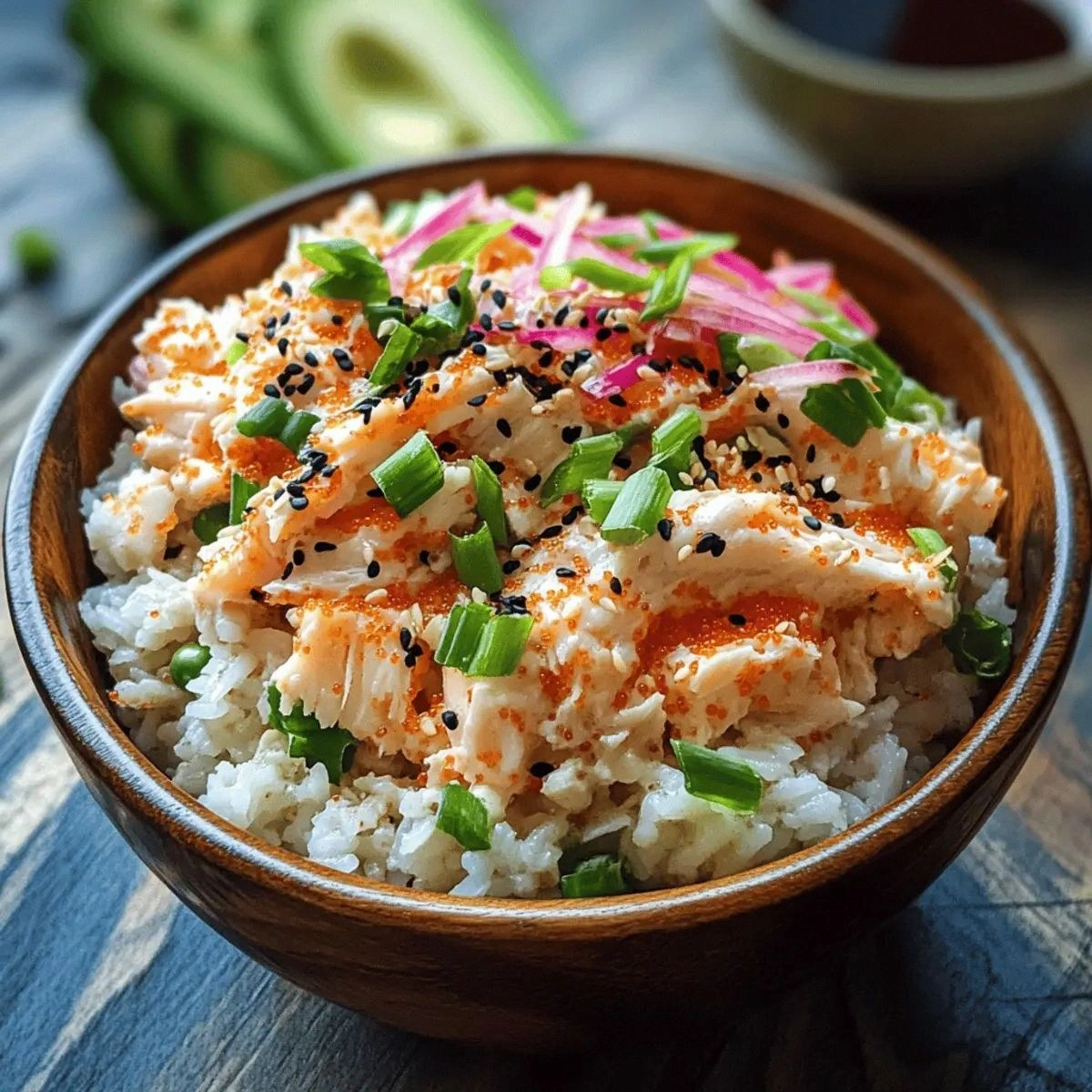
Now it’s assembly time. Divide the seasoned rice among four bowls, creating a smooth, even base. Spoon a generous mound of the spicy crab mixture on top of each rice bed. Sprinkle toasted sesame seeds and thinly sliced green onions over the crab. Finish each bowl with a small dollop of wasabi on the side, a few slices of pickled ginger, and an extra drizzle of soy sauce if you like.
Give the bowl a quick visual inspection. The colors should pop—white rice, orange‑red crab, green onions, and the dark specks of sesame. The aroma should be a blend of sea, heat, and toasted nuts. Take a moment to admire your work; this is the moment of truth where you realize you’ve created something that looks as good as it tastes.
Serve immediately, or cover with a loose foil if you need to hold them for a few minutes. The rice will stay warm, and the sauce will keep its glossy sheen. Pair with a crisp Japanese lager or a chilled green tea, and watch your guests dive in. That sizzle when it hits the pan? Absolute perfection. That first bite? Pure magic.
Insider Tricks for Flawless Results
The Temperature Rule Nobody Follows
Rice that’s too hot will melt the mayo, turning your sauce into a soupy mess. Let the rice cool for at least five minutes after cooking before mixing in the soy sauce. This small pause ensures the sauce stays thick and clings to the crab. I once tried to skip this step in a rush; the result was a soggy bowl that tasted like a kitchen accident. Trust me, the temperature rule is the difference between a restaurant‑grade bowl and a kitchen mishap.
Why Your Nose Knows Best
When toasting sesame seeds, rely on your sense of smell rather than a timer. The moment you detect a nutty, slightly sweet aroma, they’re ready. Over‑toasting will introduce a burnt note that overpowers the delicate crab. My nose has saved countless bowls from disaster, and it will save yours too. This is the subtle art that separates the casual cook from the sushi virtuoso.
The 5‑Minute Rest That Changes Everything
After tossing the crab with spicy mayo, let it rest for five minutes. This resting period allows the mayo to absorb the sriracha’s heat, creating a deeper, more integrated flavor. Skipping this rest is like serving a song before the chorus—you’ll miss the full impact. I’ve seen impatient cooks serve immediately and wonder why the sauce tastes flat; a brief pause solves that problem instantly.
The Soy Sauce Slider
Instead of dumping soy sauce directly into the rice, keep a small dish of soy sauce on the table. This lets each diner control their salt level, preventing the bowl from becoming overly salty. It also adds a fun interactive element to the meal, making the experience feel more personalized. If you love a salty kick, add a splash; if you prefer a lighter taste, just a dab will do.
The Pickled Ginger Rescue
Pickled ginger isn’t just a garnish; it acts as a palate cleanser, resetting your taste buds between bites. If you find the heat lingering, a quick bite of ginger will neutralize it, allowing you to enjoy the full flavor spectrum. Keep a small pile on the side, and watch how it transforms the eating rhythm. It’s a tiny trick that makes a massive difference.
Creative Twists and Variations
This recipe is a playground. Here are some of my favorite ways to switch things up:
Tropical Heat
Swap the imitation crab for diced mango and a splash of lime juice. The sweet mango pairs beautifully with the spicy mayo, creating a sweet‑heat combo that feels like a beach vacation in a bowl. Add a handful of shredded coconut for extra texture, and you’ve got a tropical twist that will wow anyone who loves a little sunshine.
Veggie‑Boosted Bowl
Add thinly sliced cucumber, avocado cubes, and shredded carrots to increase the veggie quotient. The cool cucumber balances the heat, while avocado adds buttery richness. This version is perfect for a light lunch that still satisfies cravings for bold flavor.
Umami Powerhouse
Incorporate a spoonful of miso paste into the mayo mixture for an extra umami depth. The miso will add a savory, slightly fermented note that elevates the entire bowl. Pair with a drizzle of toasted sesame oil for a truly decadent experience.
Spicy Tuna Upgrade
Replace the crab with sashimi‑grade tuna, diced and tossed in the same spicy mayo. Tuna’s firm texture holds up well, and the flavor profile becomes richer and more luxurious. This variation feels like a step up to a high‑end sushi restaurant, yet it’s still made at home.
Crunchy Crunch
Add a handful of crispy fried onions or tempura flakes on top for an extra crunch factor. The contrast between the soft rice and the crunchy topping creates a textural surprise that keeps every bite interesting. Just be careful not to overdo it; a light sprinkle is all you need.
Storing and Bringing It Back to Life
Fridge Storage
Store the rice and the spicy crab mixture in separate airtight containers. The rice will stay fresh for up to 3 days, while the crab mixture can last 2 days. When ready to serve, reheat the rice in the microwave with a splash of water and a quick stir—this restores its fluffy texture.
Freezer Friendly
Both rice and crab mixture freeze well. Portion the rice into freezer‑safe bags, flattening them for even thawing. The crab mixture can be stored in a sealed container for up to a month. Thaw overnight in the fridge, then gently warm both components before assembling.
Best Reheating Method
When reheating, add a tiny splash (about a teaspoon) of water to the rice and cover it with a damp paper towel before microwaving. This creates steam that revives the rice’s softness. For the crab, heat gently in a skillet over low heat, stirring constantly to keep the sauce from separating. The result is a bowl that tastes just as fresh as the day you made it.