I still remember the morning I created the ultimate breakfast skillet. It was one of those chaotic Sunday mornings where the fridge held exactly three eggs, some sad-looking potatoes, and a wilting bell pepper. My friends were coming over for brunch in an hour, and I was this close to serving cereal and calling it a day. But something magical happened in that cast iron pan that day — the kind of kitchen alchemy that transforms humble ingredients into pure morning bliss.
The smell of those potatoes hitting hot oil, the way the edges turned golden and crispy while staying fluffy inside, the moment the eggs hit that perfectly seasoned pan and the whites started setting around those vibrant yellow yolks — I knew I was onto something special. My friends arrived to find me standing over the stove, spatula in hand, grinning like I'd just discovered fire. The first bite? Absolute silence around the table, followed by the kind of enthusiastic fork-clanking that every home cook dreams about.
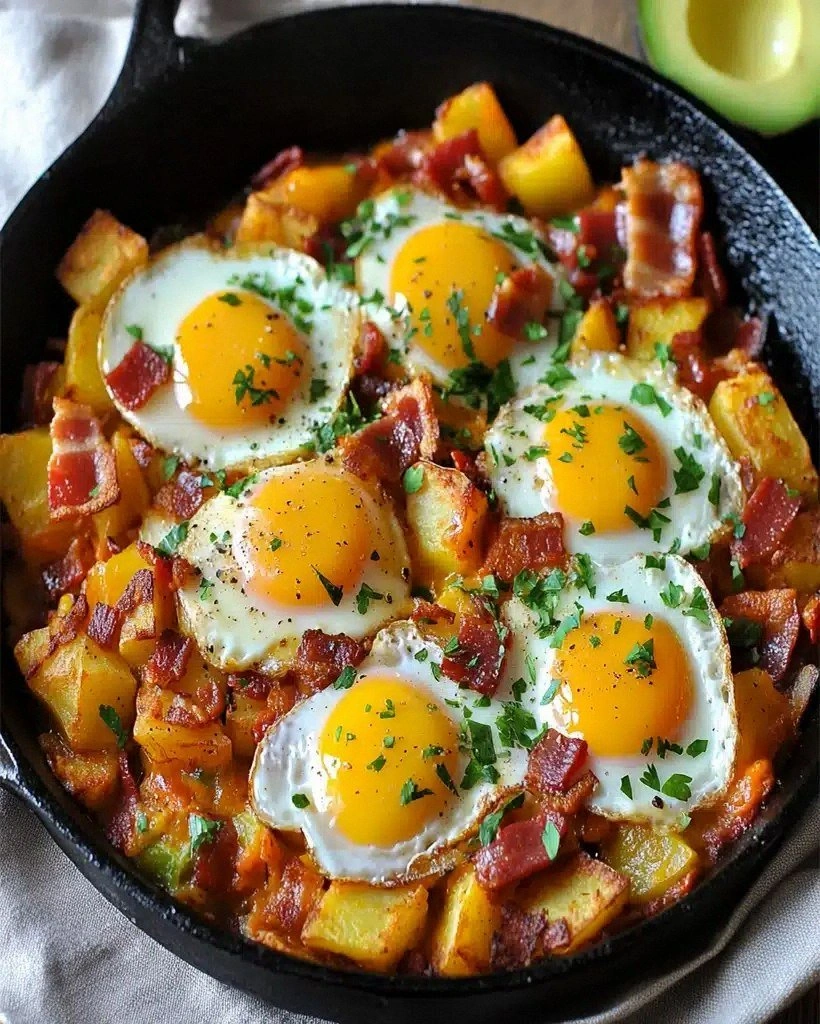
Since that fateful morning, I've refined this recipe through dozens of iterations, testing every possible technique and ingredient combination. I've made it for breakfast dates, family gatherings, and those solo mornings when you need comfort food that hugs your soul. Each time, it delivers the same incredible results — crispy-edged potatoes that shatter like autumn leaves, eggs with yolks that run like liquid sunshine, and vegetables that add pops of color and flavor throughout.
This isn't just another breakfast skillet recipe. This is the one that will make you cancel brunch reservations and stay home in your pajamas. The one that will have your neighbors knocking on your door asking what smells so incredible. The one that will ruin all other breakfast skillets for you forever — in the best possible way. Let me walk you through every single step — by the end, you'll wonder how you ever made it any other way.
What Makes This Version Stand Out
Unbeatable Texture: Most breakfast skillets serve you sad, steamed potatoes that taste like cafeteria food. Not this one. We start with a cold pan technique that renders the potato starch, creating impossibly crispy edges that crack like a crème brûlée while staying cloud-soft inside. The secret is all in the timing — I dare you to taste this and not go back for seconds.
One-Pan Wonder: While other recipes have you juggling multiple pans like a circus performer, this beauty comes together in a single skillet. The potatoes roast while the vegetables sauté and the eggs poach in the same pan. Less dishes, more coffee time. Picture yourself pulling this out of the oven, the whole kitchen smelling incredible, and realizing you only have one pan to wash.
Customizable Magic: This recipe is like your favorite pair of jeans — it works with whatever you have in your fridge. Leftover vegetables? Throw them in. Different cheese? Go wild. Vegetarian, gluten-free, dairy-free — it adapts to everyone at your table. I'll be honest — I ate half the batch before anyone else got to try it because I kept "testing" different combinations.
Restaurant-Quality Results: The technique I'm about to show you is what separates home cooking from restaurant cooking. That perfect egg-to-potato ratio, the way everything's cut for maximum flavor absorption, the seasoning sequence — it's pure magic. Most recipes get this completely wrong. Here's what actually works.
Make-Ahead Friendly: Mornings are hard enough without complicated cooking. Prep everything the night before, then just crack eggs and go. The potatoes can be par-cooked, vegetables chopped, cheese grated. Come morning, you're five minutes from breakfast nirvana. Okay, ready for the game-changer?
Feeding a Crowd: Whether you're cooking for two or ten, this recipe scales beautifully. The technique stays the same, the ratios stay perfect, and every single person gets those coveted crispy potato edges. Your future self will thank you when you're hosting brunch and everyone thinks you're a culinary genius.
Inside the Ingredient List
The Flavor Base
Let's talk about the humble potato — the foundation of this entire operation. I'm not talking about any old potato here. You want waxy varieties like Yukon Gold or red potatoes that hold their shape when roasted. Russets will fall apart and turn mushy, which is breakfast heartbreak waiting to happen. Cut them into 3/4-inch pieces — big enough to stay fluffy inside, small enough for maximum crispy surface area. If you've ever struggled with potatoes that are burnt outside and raw inside, you're not alone — and I've got the fix.
Yellow onions are your aromatic backbone, slowly caramelizing and adding natural sweetness that balances the savory elements. Don't rush this step — let them go low and slow until they're golden and jammy. This takes about 8-10 minutes, during which your kitchen will start smelling like the best diner in town. The onions practically melt into the potatoes, creating these little pockets of sweet-savory heaven throughout your skillet.
The Texture Crew
Bell peppers bring the crunch factor and pops of color that make this dish Instagram-worthy. I use a mix of red and yellow for sweetness and visual appeal, but green works if you like that slightly bitter edge. Cut them into pieces roughly the same size as your potatoes — this ensures even cooking and perfect bites where you get a little bit of everything. The peppers maintain their structure during roasting, adding that fresh, bright snap that keeps the dish from feeling heavy.
Garlic goes in towards the end because burnt garlic is bitter garlic, and bitter garlic ruins breakfast. Mince it fine and add it when the vegetables are almost done so it perfumes everything without turning acrid. That moment when the garlic hits the hot pan and fills your kitchen with that unmistakable aroma? Pure magic. This next part is where most people go wrong — they add the garlic too early and end up with bitter, brown bits that taint the whole dish.
The Unexpected Star
Here's where I get a little controversial — I add a touch of smoked paprika for depth and complexity. Not enough to make it taste like barbecue, just enough to add that "what is that amazing flavor?" note. It's like adding a dash of mystery to your morning. The smokiness plays beautifully with the crispy potatoes and creates this warm, comforting backdrop that makes everyone ask for your secret ingredient.
Fresh herbs wake everything up at the end. I use a mix of parsley and chives because they're bright and fresh without overwhelming. Add them after cooking so they stay vibrant and punchy. Dried herbs won't work here — they need that fresh pop to cut through the richness of the eggs and potatoes. If you're growing herbs on your windowsill, this is their moment to shine.
The Final Flourish
Good eggs make all the difference. Look for pasture-raised if possible — the yolks are deeper orange, the flavor is more intense, and they're just happier eggs from happier chickens. Room temperature eggs cook more evenly, so take them out of the fridge about 15 minutes before cooking. That sizzle when it hits the pan? Absolute perfection. And now the fun part — those eggs are going to cook in little wells you make in the potato mixture, so the flavors all meld together beautifully.
The cheese situation is entirely up to you, but I'm partial to sharp cheddar for its bold flavor and excellent melting qualities. Grate it fresh — pre-shredded cheese contains cellulose that prevents smooth melting. Add it in the last few minutes so it melts into gooey perfection without becoming greasy. Some days I go with pepper jack for a spicy kick, other days it's crumbled feta for tang. This recipe is your playground.
The Method — Step by Step
- Start with your largest, heaviest skillet — cast iron if you have it, but any heavy pan works. Place it on the stove and add your diced potatoes, then pour in just enough oil to coat them lightly. This is the moment of truth — we're starting cold and heating up together, which is the opposite of everything you've probably learned about searing. Turn the heat to medium and let the magic happen. Resist the urge to stir constantly; let those potatoes develop their golden crust. After about 12-15 minutes, you'll see the edges starting to brown and the potatoes becoming tender inside.
- While the potatoes work their crispy magic, prep your vegetables. Dice the onion into pieces that match your potato size — consistency is key for perfect bites. Slice the bell peppers into strips, then cut across to make little squares. Mince the garlic but keep it separate for now. This is where most people mess up — they throw everything in at once and end up with mushy vegetables and raw potatoes. Stay with me here — this is worth it.
- Once your potatoes are golden and crispy on the outside and tender inside (test with a fork — it should slide in easily), push them to the sides of the pan to create a well in the center. Add your onions to this hot spot and let them sizzle. Don't walk away from the stove here — onions go from perfect to burnt faster than you can say "breakfast." After about 3 minutes, when they're starting to turn translucent, add the bell peppers. Another 3-4 minutes and everything should be getting friendly and fragrant.
- Now for the spice moment — clear a little space in the center and add your smoked paprika. Let it toast in the oil for about 30 seconds until it becomes intensely aromatic. This blooming step releases all the oils and flavors. Stir everything together so the paprika coats all the vegetables evenly. Your kitchen should smell like a sophisticated campfire at this point — warm, inviting, with just enough mystery to keep everyone curious.
- Clear four little wells in the potato mixture using the back of a spoon. Crack an egg into each well — this is where technique matters. Crack each egg into a small bowl first, then gently slide it into its well. This prevents broken yolks and shell disasters. Season each egg with salt and pepper. Reduce the heat to low, cover the pan, and let the eggs cook to your desired doneness — about 4 minutes for runny yolks, 6 for jammy, 8 for hard.
- If you're using cheese, sprinkle it around the eggs during the last 2 minutes of cooking. Cover again so it melts into gooey perfection. The cheese should melt but not separate — if it starts looking greasy, you've gone too far. Remove from heat immediately when it's perfectly melted and bubbly.
- Finish with fresh herbs scattered over everything — they'll wilt slightly from the heat but stay bright and fresh. Serve directly from the pan for maximum rustic appeal, or plate individual portions if you're feeling fancy. Let it rest for 2 minutes before serving — this prevents egg-related mouth burns and lets everything settle into perfect harmony.
- That's it — you did it. But hold on, I've got a few more tricks that'll take this to another level...
Insider Tricks for Flawless Results
The Temperature Rule Nobody Follows
Here's the thing — most people cook breakfast skillets too hot and end up with burnt outsides and raw insides. Medium heat is your magic number for the potatoes, then low heat for the eggs. I know it's tempting to crank it up for faster cooking, but patience pays off in crispy perfection. A friend tried skipping this step once — let's just say it didn't end well. She served charcoal potatoes with raw centers and we still tease her about it five years later.
The pan should be hot enough that a potato piece sizzles gently when it hits the oil, but not so hot that the oil smokes. If your potatoes are browning too quickly, reduce the heat. If they're taking forever, increase slightly. This is where cooking becomes intuitive — trust your senses over the clock.
Why Your Nose Knows Best
Forget timers — your nose is the best kitchen tool you have. When the onions start to smell sweet and caramelized, they're ready. When the garlic goes from raw and sharp to warm and aromatic, it's time to move on. That moment when the smoked paprika hits hot oil and fills your kitchen with its earthy perfume? That's your cue to stir everything together.
Learning to cook by aroma rather than time will transform your kitchen game. Each ingredient has its own smell signature that tells you when it's perfectly cooked. Onions go from sharp to sweet, garlic from pungent to mellow, potatoes from raw starch to nutty and golden. Trust these signals and you'll nail this dish every single time.
The 5-Minute Rest That Changes Everything
This might be the hardest trick to follow because everything looks and smells incredible, but waiting 5 minutes after cooking makes a massive difference. During this rest, the eggs finish setting gently, the flavors meld together, and the temperature drops to that perfect "I won't burn my mouth" zone. The potatoes absorb some of the egg yolk, creating these amazing little flavor bombs throughout.
Cover the pan loosely with foil during the rest so everything stays warm but doesn't continue cooking. Use this time to set the table, pour coffee, or just admire your handiwork. When you come back, you'll have a perfectly cohesive dish rather than separate ingredients that happen to share a pan.
Creative Twists and Variations
This recipe is a playground. Here are some of my favorite ways to switch things up:
Mexican Fiesta Skillet
Swap the bell peppers for poblano and jalapeño, add cumin and chili powder instead of paprika, and finish with cotija cheese and cilantro. Top with salsa and avocado for a breakfast that'll make you want to host brunch every weekend. The spice level is totally customizable — remove jalapeño seeds for mild, keep them for a kick that'll wake you up better than coffee.
Loaded Baked Potato Skillet
Add crispy bacon, green onions, and shredded cheddar during the last few minutes. After plating, dollop with sour cream and sprinkle with extra bacon and chives. It's like your favorite loaded baked potato had a beautiful baby with breakfast hash. Rich, indulgent, and completely worth the extra cardio.
Mediterranean Morning
Use oregano instead of paprika, add kalamata olives and sun-dried tomatoes with the vegetables, and finish with feta cheese and fresh oregano. The briny olives and sweet tomatoes create this incredible flavor contrast that transports you straight to a Greek island breakfast table.
Green Goddess Version
Load up on zucchini, asparagus, and spinach. Add herbes de Provence instead of paprika, and finish with goat cheese and a green goddess dressing drizzle. It's fresh, spring-like, and feels healthy enough to justify that mimosa. The vegetables stay bright and crisp, creating a lighter but equally satisfying version.
Spicy Korean-Style
Add gochujang to the vegetables, use scallions instead of regular onions, and finish with kimchi and a fried egg with crispy edges. The fermented heat of kimchi plays beautifully with the crispy potatoes. It's fusion food that actually works — the umami bomb that'll cure any hangover.
Thanksgiving Leftovers
This is pure genius for the day after Thanksgiving. Use leftover roasted potatoes, add stuffing cubes, diced turkey, and a spoonful of cranberry sauce on top. It's like Thanksgiving dinner for breakfast, but somehow even better because everything gets crispy and golden. The sweet-tart cranberry cuts through the richness perfectly.
Storing and Bringing It Back to Life
Fridge Storage
Store leftovers in an airtight container for up to 4 days. Let everything cool completely before storing — hot food in the fridge creates condensation that makes everything soggy. Separate the eggs from the potato mixture if possible, since they reheat differently. The potatoes actually get even more flavorful as they sit, absorbing all those beautiful seasonings.
Freezer Friendly
This skillet freezes beautifully for up to 2 months. Portion individual servings into freezer-safe containers, leaving out the eggs (they don't freeze well). When you're ready to eat, thaw overnight in the fridge, then reheat the potato mixture in a hot skillet and add fresh eggs. It takes almost no time and tastes like you just made it.
Best Reheating Method
For best results, reheat in a hot skillet with a tiny splash of water — it steams back to perfection. Cover the pan so the potatoes crisp up again and everything heats through evenly. The microwave works in a pinch, but you'll lose that crispy texture that makes this dish special. Add a fresh egg while reheating for that just-cooked feeling. Pro tip: add a tiny splash of water before reheating — it steams back to perfection and prevents everything from drying out.