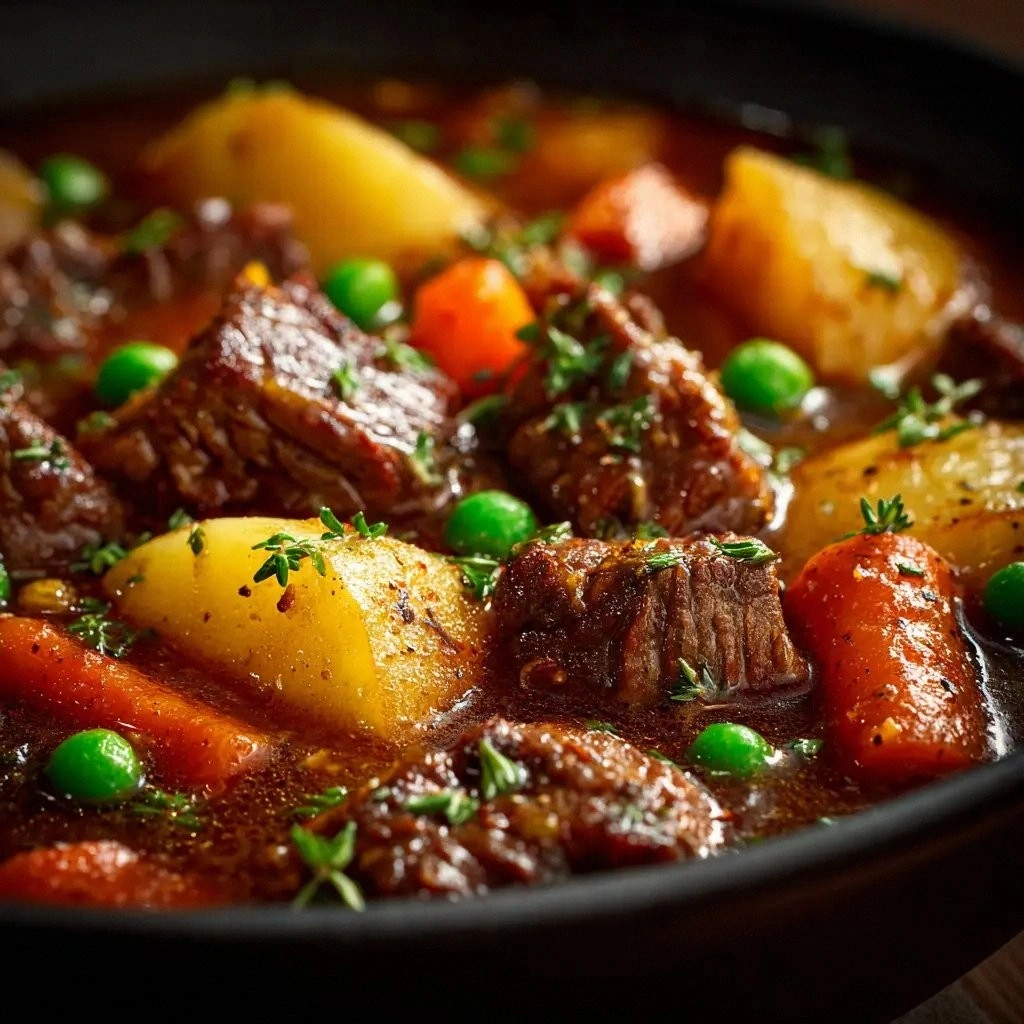
I was standing in my kitchen, watching a pot of bland stew simmer on the stove, when a friend shouted, “I dare you to taste this and not go back for seconds!” That moment became the spark that led me to create the ultimate version of this classic comfort dish. The aroma of browned beef and caramelized onions filled the air, turning the kitchen into a fragrant sanctuary. My eyes widened as I saw the glossy, velvety sauce coating the vegetables, and my mouth already imagined the first bite. If you’ve ever felt that your stew was missing something, you’re not alone — and I’ve got the fix.
Picture yourself pulling this out of the crockpot, the whole kitchen smelling incredible, and the family gathering around the table like a well‑worn quilt. That instant of warmth is what makes a simple recipe feel like a hug. I’ve spent countless evenings tweaking the balance of broth to meat, experimenting with herbs, and even testing a slow‑cook versus a quick‑cook method, and each iteration felt like a step closer to perfection. The result? A stew that’s both hearty and refined, with a depth of flavor that makes every spoonful a revelation.
What sets this version apart is that it’s built on a foundation of quality ingredients and a few game‑changing techniques that most recipes overlook. From searing the beef to lock in juices, to using a flour slurry for a silky finish, every detail is designed to elevate the humble stew into something unforgettable. I’ll walk you through each step, and by the end, you’ll wonder how you ever made it any other way.
So grab your crockpot, and let’s dive into the ultimate beef stew recipe that will have you saying, “This is hands down the best version you’ll ever make at home.”
What Makes This Version Stand Out
- Flavor Depth: The combination of Worcestershire sauce, tomato paste, and a splash of red wine creates a complex umami profile that lifts the stew beyond the ordinary.
- Texture Balance: Tender chunks of beef sit beside crisp‑to‑the‑bite carrots and creamy potatoes, offering a satisfying contrast in every bite.
- Easy Prep: All the chopping and searing can be done in under 30 minutes, and the rest of the cooking happens automatically in the crockpot.
- Make‑Ahead Friendly: This stew freezes beautifully, so you can make a double batch and enjoy it over the next few days.
- Crowd‑Pleaser: Even the pickiest eaters will find the gentle seasoning and hearty vegetables appealing.
- Ingredient Quality: Using a high‑quality chuck roast and fresh, seasonal produce ensures every bite is packed with flavor.
- Versatility: The base is so solid that you can swap in different vegetables or add a splash of bourbon for a twist.
- Time Efficiency: While the crockpot does the heavy lifting, the active cooking time is minimal, freeing up your schedule.
Inside the Ingredient List
The Flavor Base
At the heart of any great stew is a robust flavor base. The beef chuck roast is the star, bringing a deep, meaty sweetness that’s essential for a comforting dish. The olive oil is not just a cooking medium; it helps brown the meat, creating that caramelized crust that locks in juices. Yellow onion and garlic are the aromatics that build the foundational notes, releasing sweetness and pungency as they cook. Tomato paste adds acidity and a subtle sweetness that balances the richness of the beef.
Worcestershire sauce is the secret sauce that adds a savory, slightly tangy kick. Its complex blend of vinegar, molasses, and anchovy extracts deep umami that’s hard to replicate with simple seasonings. Dried thyme and rosemary provide herbaceous brightness, while bay leaves infuse the broth with a subtle, earthy aroma. Together, these ingredients create a sauce that coats the beef like velvet, ensuring every bite is packed with flavor.
The Texture Crew
Texture is everything in a stew. The all-purpose flour is the unsung hero that thickens the broth into a luscious sauce. By coating the beef before searing, the flour forms a gentle crust that adds body to the dish. Cornstarch, later combined with cold water, gives the final touch of silkiness, ensuring the stew isn’t thickened too much or too thin.
Potatoes and carrots bring a satisfying bite, with potatoes offering a creamy heartiness and carrots contributing a gentle sweetness. Celery adds a subtle crunch and a peppery note that cuts through the richness. Frozen peas, added at the end, provide a pop of color and a burst of fresh sweetness that brightens the overall profile.
The Unexpected Star
While the main ingredients are familiar, the unexpected star is the small splash of red wine. Even a modest amount of wine deepens the broth’s complexity, adding a subtle fruity note that elevates the entire dish. If you’re not a fan of wine, a dash of balsamic vinegar can offer a similar depth.
Another surprise is the use of a small amount of brown sugar in the initial searing stage. The sugar caramelizes, adding a hint of sweetness that balances the acidity of the tomato paste and the savory depth of the beef.
The Final Flourish
The final flourish comes from the finishing touches that elevate the stew to a restaurant‑quality experience. A quick stir of the cornstarch slurry right before serving thickens the sauce to the perfect consistency without making it gloopy. A sprinkle of fresh parsley or a dash of cracked black pepper adds a fresh, vibrant finish that brightens the dish.
Everything's prepped? Good. Let’s get into the real action.
The Method — Step by Step
- Step 1: Prep the Beef – Trim the chuck roast of excess fat and cut into 1½‑inch cubes. Pat the pieces dry with paper towels; this ensures a good sear. Season each cube generously with salt and black pepper. The goal is to lock in flavor before the slow cook.
- Step 2: Sear the Meat – Heat the olive oil in a large skillet over medium‑high heat. Add the beef in batches, allowing each side to brown without overcrowding. Once browned, transfer the cubes to the crockpot. This caramelization step creates a savory crust that deepens the stew’s flavor.
- Step 3: Build the Base – In the same skillet, reduce the heat to medium and add the chopped onion. Sauté until translucent, about 3 minutes. Add the minced garlic and cook for another minute until fragrant. Then stir in the tomato paste and brown sugar, cooking for 2 minutes to develop a richer color.
- Step 4: Deglaze and Combine – Pour in a splash of red wine to deglaze the skillet, scraping up all the browned bits. Then transfer this liquid to the crockpot. Add the beef broth, Worcestershire sauce, thyme, rosemary, and bay leaves. Stir to combine and bring to a gentle simmer.
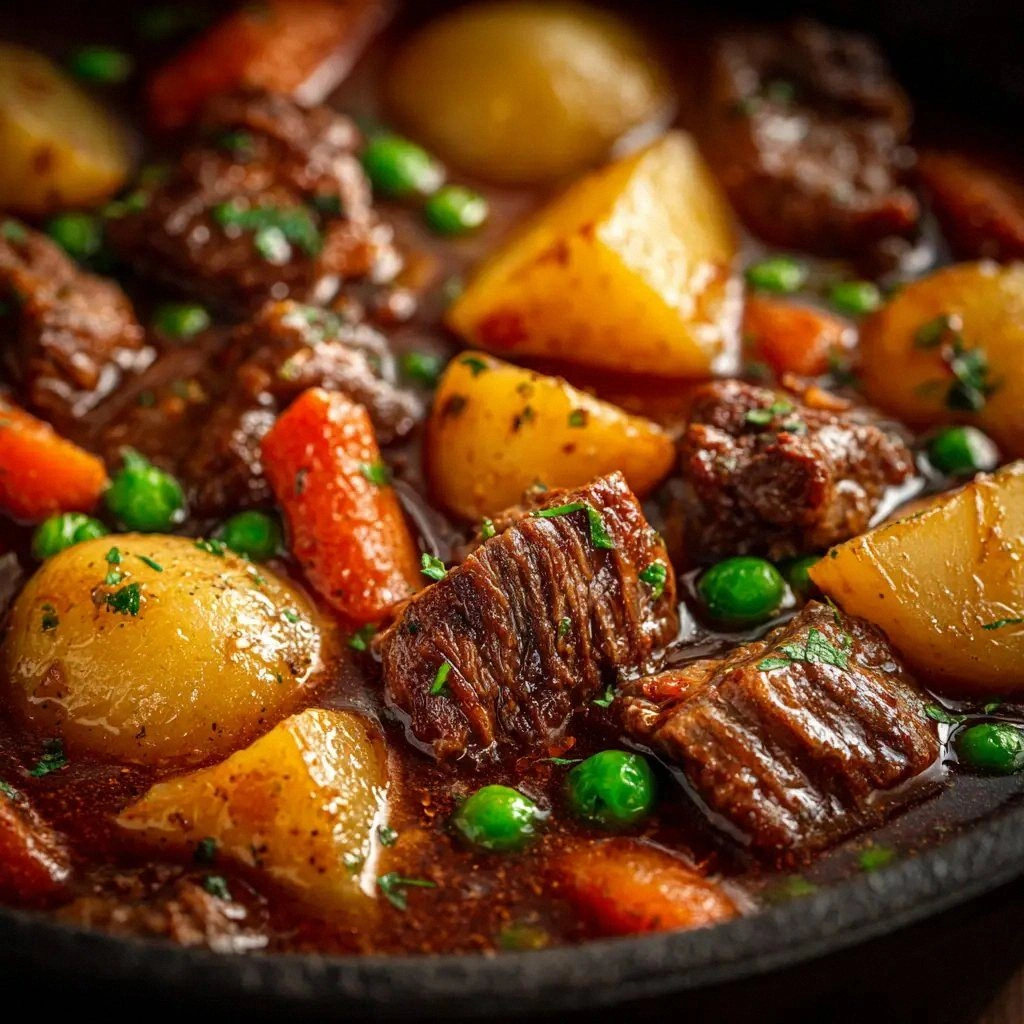
- Step 5: Add Vegetables – Layer the carrots, potatoes, celery, and peas over the liquid. The vegetables should be mostly submerged but not too crowded. This arrangement ensures even cooking and a beautiful presentation.
- Step 6: Slow Cook – Cover the crockpot and set to low for 8 hours or high for 4 hours. The long, low heat breaks down the connective tissue in the beef, making it melt‑in‑your‑mouth tender. The vegetables will absorb the flavors, becoming tender but still holding their shape.
- Step 7: Finish with a Slurry – In a small bowl, whisk together the cornstarch and cold water until smooth. Stir this slurry into the stew and let it cook for an additional 15 minutes on low. The result is a glossy, silky sauce that clings to each piece of meat and vegetable.
- Step 8: Serve and Enjoy – Remove the bay leaves, give the stew a final stir, and taste for seasoning. Adjust salt or pepper if needed. Ladle the stew into bowls, garnish with fresh parsley, and serve with crusty bread or a side of rice. The aroma alone will have your guests lining up for seconds.
That’s it — you did it. But hold on, I’ve got a few more tricks that’ll take this to another level.
Insider Tricks for Flawless Results
The Temperature Rule Nobody Follows
Many cooks set the crockpot to high and hope for the best. The truth is, low and slow is the key to melt‑in‑your‑mouth beef. The gentle heat breaks down collagen without drying out the meat, and the vegetables absorb the flavors evenly. If you’re short on time, a 4‑hour high setting will still deliver great results, but the low setting is where the magic happens.
Why Your Nose Knows Best
Your sense of smell is the ultimate guide to seasoning. As the stew simmers, the aroma will evolve from a savory base to a complex bouquet. When you notice a faint hint of sweetness from the tomato paste, that’s the moment to check the salt. A well‑balanced stew should smell like comfort, not like a chemical lab.
The 5‑Minute Rest That Changes Everything
Once you remove the stew from the crockpot, let it sit for five minutes before serving. This brief rest allows the flavors to settle and the sauce to thicken slightly. It also gives the meat fibers a chance to relax, making each bite even more tender.
The Secret to Crispy Carrots
If you prefer your carrots with a bit of crunch, sauté them in a hot pan for 2 minutes before adding them to the crockpot. The quick sear adds a caramelized exterior that contrasts beautifully with the soft interior. This trick is especially handy when you’re serving a crowd that loves a textural variety.
The Quick Fix for a Stubborn Sauce
If you notice the stew is too thin, you can add a spoonful of flour directly into the pot and whisk vigorously. The flour will absorb excess liquid and thicken the sauce without the need for a slurry. Just be sure to stir constantly to avoid lumps.
Creative Twists and Variations
Bourbon‑Infused Stew
Add a splash of bourbon to the deglazing step for a smoky, caramelized flavor. The alcohol evaporates, leaving a subtle depth that pairs beautifully with the beef. This variation is perfect for a cozy fall evening.
Mushroom Medley
Replace the carrots with sliced mushrooms for a richer umami profile. The mushrooms soak up the broth and add an earthy note that complements the beef. This version is ideal for mushroom lovers and adds a new texture.
Spicy Kick
Introduce a teaspoon of crushed red pepper flakes during the sauté step. The heat will dance across the stew, giving it a lively bite that contrasts with the mellow broth. This twist is great for those who like a bit of heat.
Vegetarian Alternative
Swap the beef for hearty cubed butternut squash and use vegetable broth instead of beef broth. Add a handful of lentils for protein. This version maintains the comforting essence while offering a plant‑based option.
Herb‑Rich Variation
Increase the amount of rosemary and thyme, and add a handful of fresh flat‑leaf parsley at the end. The fresh herbs brighten the stew and give it a vibrant color. This variation works well when you have a garden harvest.
Crispy Bacon Twist
Sauté diced bacon until crisp, then add it to the stew during the last 30 minutes. The bacon fat infuses the broth with smoky flavor, and the crispy bits add a delightful crunch. This twist is a crowd‑pleaser for bacon lovers.
Storing and Bringing It Back to Life
Fridge Storage
Cool the stew to room temperature, then transfer to airtight containers. Store in the refrigerator for up to 4 days. The flavors will deepen, and the stew will be even more comforting when reheated.
Freezer Friendly
Divide the stew into single‑serving portions before freezing. Use freezer‑safe containers or heavy‑sided zip‑top bags. The stew keeps well for up to 3 months. When ready, thaw overnight in the fridge and reheat gently.
Best Reheating Method
Reheat on the stovetop over low heat, stirring occasionally. Add a splash of water or broth if the stew has thickened too much. A quick 5‑minute rest before serving will allow the flavors to settle. The result is a silky, flavorful stew that tastes almost brand new.