Picture this: it is a gray November afternoon, the kind that makes your kitchen windows fog from the inside, and you have just discovered that the last of the pumpkin pie vanished at breakfast. You promised friends a dessert for game night, the market is closing in forty-five minutes, and all that remains in the fruit drawer is a crimson tumble of cranberries so bright they practically hum. Panic? Not on my watch. I slammed that drawer shut, rolled up my sleeves, and muttered the three most dangerous words in baking: “Hold my spatula.” Ninety minutes later I was pulling golden half-moons from the oven, the filling bubbling like molten rubies, the crust shattering under the fork with a sound that could make a grown baker weep. I ate two standing up—no plate, no dignity—before the tray even hit the cooling rack. That, my friend, is how Cranberry Hand Pies Delight in this Easy Recipe! was born, and I have been shouting its virtues from every rooftop (and group chat) ever since.
Most cranberry desserts play it safe: too much sugar, too little zing, the berry’s sass tamed into bland, jammy obedience. These hand pies do the opposite. They flaunt the fruit’s bracing tartness, wrap it in buttery layers so flaky they could double as croissant cousins, then finish with a glossy swipe of orange-scented glaze that crackles like thin ice under your teeth. The best part? You do not need a mixer, a food processor, or one of those intimidating lattice-top skills you have been avoiding since 2014. A bowl, a pin, and the willingness to get a little flour on your hoodie are the only memberships required for this club.
If you have ever wrestled with pies that leak like a gossip columnist, crusts that taste like cardboard, or fillings that scald your tongue off because you could not wait for them to cool, relax—you are not alone. I have made every mistake so you do not have to. This recipe is the result of five years of obsessive tweaks, three burnt tongues, and one small kitchen fire (long story, but the fire department guys loved the samples). Let me walk you through every single step—by the end, you will wonder how you ever made it any other way.
What Makes This Version Stand Out
Flaky-But-Not-Fussy Pastry: We fold sour cream into the dough for tenderness, then grate frozen butter like cheese so the flakes form themselves—no pastry cutter required.
Tart-Forward Filling: Instead of drowning cranberries in sugar, we balance them with brown sugar’s caramel notes and a kiss of orange zest. The result tastes like holiday fireworks.
Pocket-Perfect Portions: Hand pies travel like champions. Tuck one into a coat pocket for a winter walk, pack them into lunch boxes, or stack them like edible Jenga on a dessert board.
One-Tray Clean-Up: Parchment paper is your only kitchen confidant here. No pie weights, no spring-form pan, no existential dread while scrubbing caramelized fruit off vintage glassware.
Make-Ahead Hero: Freeze the shaped, unbaked pies on a tray, then bag them for later. Bake straight from frozen when surprise guests appear—add ten minutes, look like a wizard.
Flavor Glow-Up: A whisper of cardamom adds intrigue; orange extract amplifies citrus without extra liquid. Together they make the cranberry sing harmony instead of solo.
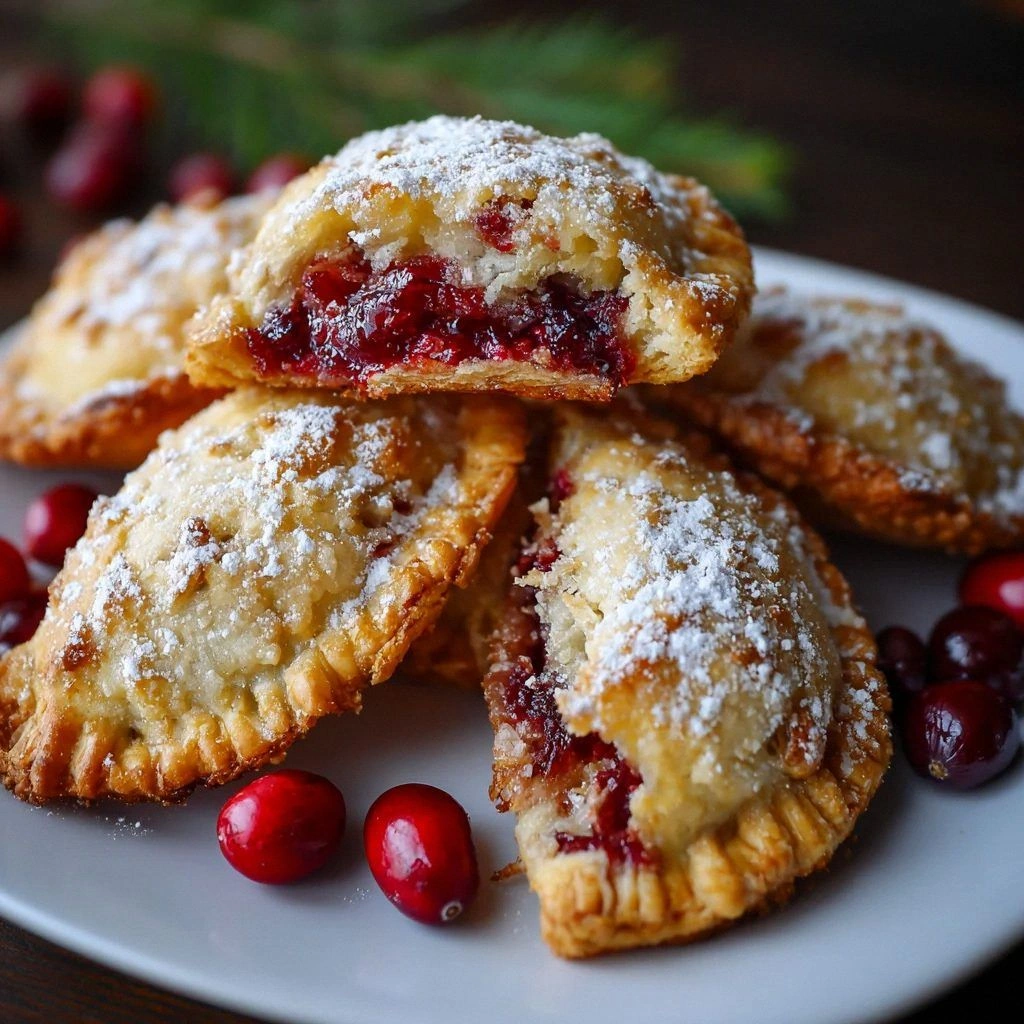
Instagram Gold: The crimson filling peeks through the vent slits like stained glass. Snap a photo fast, because the plate empties quicker than you can say “natural lighting.”
Inside the Ingredient List
The Flavor Base
All-purpose flour is the quiet overachiever here, giving structure without toughness. Measure it by fluffing the flour, spooning it into the cup, and leveling with the back of a butter knife—scooping directly compacts it into hockey-puck territory. Baking powder adds micro-lift so the pastry rises into layers rather than shrinking into sad slabs. Salt is non-negotiable; it amplifies every other flavor and keeps the crust from tasting like bakery cardboard. Skip it and you will produce hand pies that eat like sweetened air.
The Spice Ensemble
Ground cinnamon is the comforting sweater of spices, familiar and reassuring, while nutmeg is the quirky scarf that makes people ask, “Ooh, what is that?” Cardamom is the optional wildcard that teleports your taste buds straight to Scandinavian Christmas markets. Use only a pinch—too much and your pies taste like potpourri. If you do not keep cardamom on hand, swap in a whisper of ginger for a brighter heat that still plays nicely with cranberry’s sass.
The Fat & Tang Crew
Unsalted butter lets you control salt levels precisely, plus it browns beautifully around the edges for nutty depth. Grating it keeps the pieces pea-sized, ideal for steam pockets that translate to skyscraper flakes. Full-fat sour cream brings subtle tang and tenderness; low-fat versions water down the dough and leave you with rubbery crust. Orange zest hits refresh on the entire pastry, its oils perfuming every bite. Zest the orange before juicing—micro-planers make quick work of it, and the aroma is basically aromatherapy.
The Cranberry Spotlight
Fresh cranberries bounce when rolled across the counter—if yours don’t, they are past their prime. Rinse and pat dry; excess water thins the filling. Frozen berries work in a pinch, but thaw them first and blot like you are erasing a crime scene or the extra moisture will gush through the seals. Slice larger berries in half so they collapse into jammy pockets rather than rolling like marbles inside the pie. The first taste should make your cheeks tingle; that is the cranberry calling card, and it is exactly what we want.
The Sweeteners & Binding
Granulated sugar sweetens the pastry dough, while light brown sugar’s molasses notes round out the cranberries’ sharp elbows. Eggs enrich the crust and act as glue for the egg wash, turning the surface a glossy mahogany. Vanilla extract is the warm hug everyone expects; orange extract is the unexpected high-five that makes eyes light up. If you only own vanilla, double the zest and forge ahead boldly.
The Method — Step by Step
- Whisk the dry team—flour, baking powder, salt, cinnamon, nutmeg, and cardamom—in the biggest bowl you own. Creating a well-blended foundation prevents sneaky spice bombs in the final bite. Take a whiff; it should smell like the holidays punched you in the best way.
- Grate the frozen butter directly onto the flour, tossing the shreds gently with your fingertips like you are folding clouds. Work fast—if the butter starts to melt, the flakes morph into glue. Pop the whole bowl into the freezer for five minutes while you measure the wet ingredients; think of it as a power nap for pastry.
- In a separate jug, whisk sour cream, egg, both sugars, orange zest, vanilla, and orange extract until the mixture looks like sunrise-colored silk. This emulsion hydrates evenly and keeps the crust tender because the fat in sour cream coats the flour’s gluten strands, preventing them from toughening up like gym rats.
- Dump the wet onto the dry and fold with a silicone spatula just until the dough starts to clump like damp granola. Resist the urge to overmix; the last few streaks of flour will hydrate as the dough chills. The bowl should look shaggy and slightly nubby—perfection masquerading as chaos.
- Turn the dough onto a sheet of parchment, press it into a rough rectangle, and fold it like a business letter: bottom third up, top third down. This quick lamination multiplies layers without a French pastry degree. Wrap the slab in the parchment and refrigerate at least one hour; overnight is better, because time equals flavor and relaxation equals flakiness.
- Meanwhile, make the filling: tumble cranberries into a bowl with brown sugar, a pinch of cinnamon, and orange zest. Toss like you are outfitting them for a red-carpet event. Let them macerate while the dough chills; the sugar draws out juice, creating a glossy sauce that thickens as it bakes.
- On a floured counter, roll the chilled dough to ⅛-inch thickness—thin enough to read a love letter through, but not so thin it tears when lifted. Stamp out 4-inch circles with a biscuit cutter or the rim of a deli container. Gather scraps, reroll once; any more and gluten throws a tantrum.
- Brush the edges of each circle with beaten egg, spoon a heaping tablespoon of cranberries slightly off-center, then fold like a taco. Press the perimeter with your fingers, then crimp with a fork to seal. Poke two tiny vent holes on top so steam can escape; otherwise you will have cranberry grenades.
- Arrange the pies on a parchment-lined sheet, brush tops with more egg wash, and sprinkle with coarse sugar for sparkle. Bake at 400 °F for 22–25 minutes, rotating halfway, until they are puffed, bronzed, and the filling bubbles through the vents like lava. Your kitchen will smell like a candle shop run by elves.
- Cool on the tray for ten minutes—long enough for the filling to set so it does not napalm your tongue—then transfer to a rack. Whisk confectioners’ sugar with orange juice and zest until silky, then drizzle over warm pies. The glaze will set into a crackly shell that shatters under teeth like crème brûlée’s thinner cousin.
That's it—you did it. But hold on, I've got a few more tricks that'll take this to another level...
Insider Tricks for Flawless Results
The Temperature Rule Nobody Follows
Every element—butter, sour cream, even the mixing bowl—should be cold enough to make a penguin comfortable. Warmth is the arch-enemy of flakiness; it melts butter before it can steam and lift layers. If your kitchen hovers above 74 °F, freeze your pin and sheet pan too. Yes, it looks obsessive, but so does crying over tough pastry at midnight.
Why Your Nose Knows Best
Trust aroma checkpoints more than timers. When the spices bloom, you will smell them first—about two minutes before visual browning. If the scent suddenly intensifies, peek through the oven window; edges are probably caramelizing. Pull the tray when you catch that whiff of toasted butter and orange oil, then count on carry-over color while they rest.
The 5-Minute Rest That Changes Everything
After glazing, park the pies on a wire rack for five minutes. The sugar shell hardens, the interior relaxes, and the difference between good and bakery-level is decided right here. A friend tried skipping this once—let us just say the glaze slid off like a bad toupee and pooled into sticky puddles. Patience, baker. Five tiny minutes.
Creative Twists and Variations
This recipe is a playground. Here are some of my favorite ways to switch things up:
Apple-Cranberry Crunch
Swap half the cranberries for diced Honeycrisp, add a tablespoon of maple syrup, and finish with crushed pecans on top of the glaze. The apples mellow the tartness and the nuts give toasty depth. Great for those friends who claim they “don’t like sour desserts”—they will convert after one bite.
Spiced Orange Bourbon
Drizzle a teaspoon of bourbon into the filling and add a whisper of clove. The alcohol bakes off, but the smoky notes linger like a jazz saxophone solo. Perfect for adult game night or any time you want the room to say, “Wow, what is IN these?”
White Chocolate Snow Drift
Skip the orange glaze and drizzle melted white chocolate instead, then dust with freeze-dried cranberry powder. The color contrast is magazine-worthy, and the white chocolate’s sweetness tames the fruit without dulling it. Kids lose their minds over these.
Pocket-Sized Cheesecake
Beat 2 oz softened cream cheese with a tablespoon of sugar and a splash of vanilla. Dot a teaspoon onto each dough round before adding cranberries. The cheesecake nugget creates a creamy surprise that keeps the filling from leaking because the cheese acts as edible glue.
Savory-Sweet Rosemary
Add a tiny minced rosemary leaf to the dough and cut sugar by a third. Serve alongside roast pork or turkey as a fancy dinner roll that moonlights as dessert. Sounds odd until you try it—then you will start planning entire menus around these hand pies.
Storing and Bringing It Back to Life
Fridge Storage
Once completely cool, layer the pies in an airtight container with parchment between tiers. They keep three days in the refrigerator, though they rarely last that long in my house. The glaze may weep slightly; blot with a paper towel before serving and give a quick 5-minute toast in a 350 °F oven to restore crispness.
Freezer Friendly
Freeze unbaked pies on a tray until solid, then transfer to a zip-top bag with the air squeezed out. They will keep two months without flavor loss. Bake from frozen at 375 °F for 28–30 minutes, adding the glaze after cooling. Baked pies also freeze well—wrap individually in foil, then reheat at 350 °F for 12 minutes.
Best Reheating Method
Skip the microwave unless you enjoy rubbery crusts. Instead, place pies on a wire rack set inside a sheet pan and warm at 350 °F for 8–10 minutes. Add a tiny splash of water to the hot pan before closing the oven; the steam revives the interior while the dry heat crisps the shell. They emerge almost as good as fresh—dangerously close to disappearing entirely.