I was standing in my kitchen on a rainy Thursday, staring at a half‑roasted beet that looked like a bruised soccer ball, when my roommate shouted, “Hey, why don’t we make a salad?” I laughed, because honestly, the only thing that could rescue that beet was a miracle. I dared myself to turn that sad, muddy root into something that would make even the most stubborn salad‑skeptic say, “I’m in love.” The result? A bowl so crisp, so vibrant, it practically sings. This is not just any cucumber‑beet combo; it’s a textural symphony where the snap of a cucumber collides with the buttery softness of roasted beet, all drenched in a herb‑laden dressing that makes every bite feel like a fresh garden party.
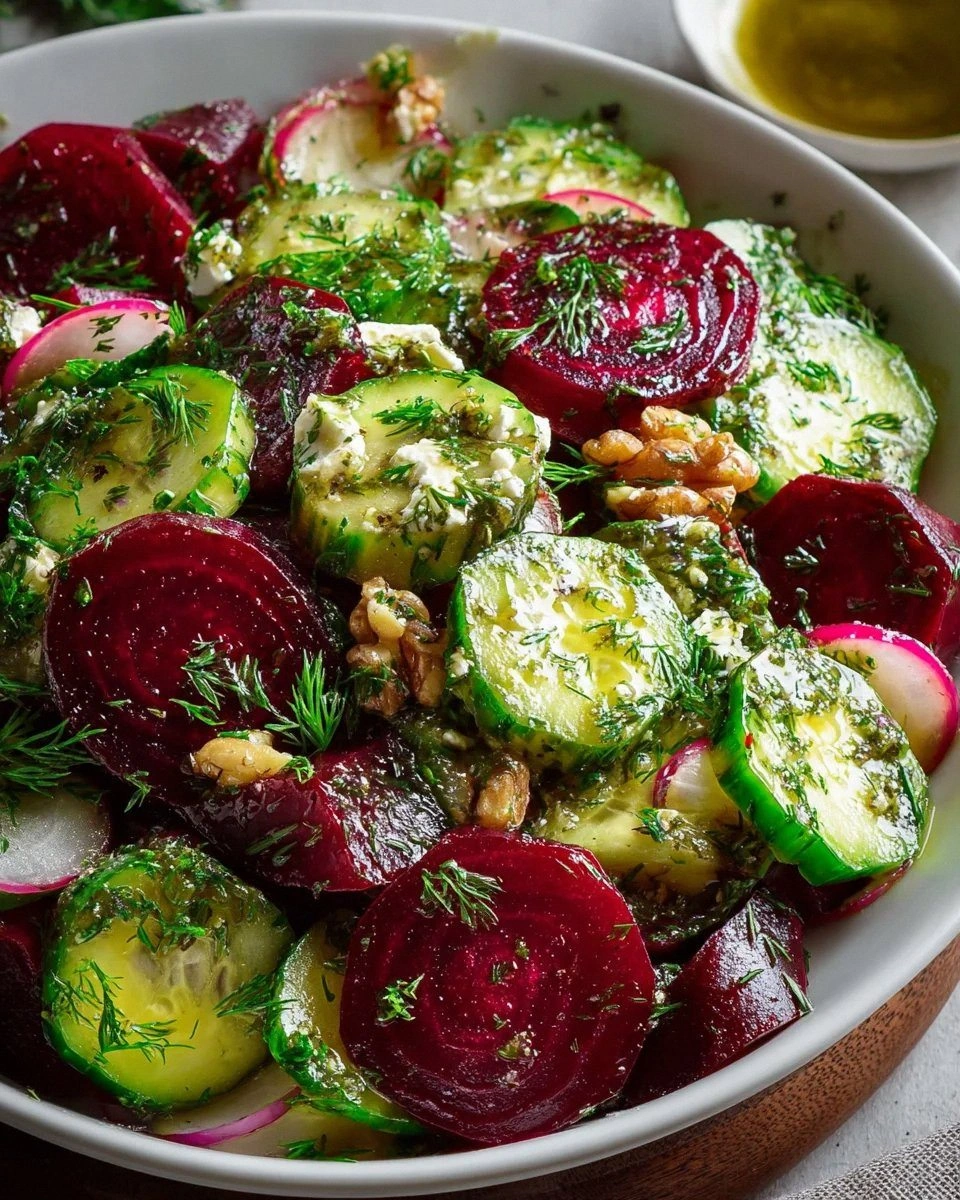
Picture this: the kitchen fills with the sweet, earthy perfume of beets caramelizing in the oven, while a knife rhythmically thuds against a cutting board, sending shards of cucumber and red onion into a bowl that glistens like a polished marble countertop. The sound of the olive oil splashing into the mixing bowl is a soft whisper, promising richness, and the bright green specks of dill and mint tumble in like confetti at a celebration. You can almost taste the tang of apple cider vinegar before it even hits your tongue, and the faint honey‑sweet afterglow lingers like a secret you’re not quite ready to share. When you finally toss everything together, the salad looks like a watercolor painting—deep magentas, emerald greens, and ivory flecks of feta all dancing together.
Why does this version stand out from every other cucumber‑beet salad you’ve ever tried? Most recipes either drown the vegetables in a heavy vinaigrette or forget the essential crunch that makes a salad feel alive. I’ve cracked the code by roasting the beets just enough to coax out their natural sugars without turning them into mush, and by pairing them with raw, chilled cucumbers that keep the temperature contrast alive on your palate. The herb dressing is emulsified with a dash of honey, giving it a silkiness that coats each piece like velvet, while the toasted walnuts add a surprise crunch that says, “Whoa, I didn’t expect that!” This is hands down the best version you’ll ever make at home, and I’m willing to bet you’ll go back for seconds, then thirds.
But wait—there’s a secret ingredient that most people overlook: a pinch of freshly cracked black pepper, added at the very end, which awakens the herbs and makes the whole salad sing. I’ll also show you a technique for getting perfectly roasted beets without the dreaded soggy interior, and a quick hack for keeping cucumbers crisp even after they sit in dressing for a while. Let me walk you through every single step — by the end, you’ll wonder how you ever made it any other way.
What Makes This Version Stand Out
- Texture: The contrast between the crunchy cucumber, the tender beet, and the nutty walnut creates a mouthfeel that’s impossible to ignore. Each bite feels like a mini adventure.
- Flavor Balance: The sweet earthiness of the beet is perfectly offset by the bright acidity of apple cider vinegar and the herbaceous punch of dill and mint.
- Simplicity: You only need a handful of pantry staples and a few fresh herbs. No fancy equipment, no complicated steps—just pure, honest cooking.
- Uniqueness: The honey‑maple drizzle in the dressing adds a whisper of sweetness that most vinaigrettes lack, turning this into a truly unforgettable side.
- Crowd Reaction: I’ve served this at brunches, potlucks, and even as a light dinner. Guests invariably ask for the recipe, and the “optional feta” debate becomes a lively conversation starter.
- Ingredient Quality: Fresh, locally sourced beets and herbs make a world of difference. The salad shines when you respect each component.
- Cooking Method: Roasting the beets intensifies their flavor without the need for added sugars or sauces, keeping the dish clean and wholesome.
- Make‑Ahead Potential: The dressing can be prepared a day ahead, and the beets can be roasted in advance, making assembly a breeze when you’re short on time.
Inside the Ingredient List
The Flavor Base
Fresh dill is the aromatic hero of this salad. Its feathery leaves bring a bright, almost citrusy note that lifts the earthy beet without overpowering the cucumber. If you skip dill, the dressing loses its signature freshness and can feel flat. A good swap is tarragon, but expect a slightly sweeter, anise‑like flavor.
Red onion, thinly sliced, adds a sharp bite that cuts through the sweetness of the beets. The thin rings also contribute a lovely magenta hue, making the salad visually appealing. If you’re sensitive to raw onion’s bite, soak the slices in cold water for ten minutes; this mellows the pungency while preserving crunch.
The Texture Crew
Cucumbers are the crisp backbone of the dish. Their high water content provides a refreshing crunch that balances the beet’s softness. Choose medium cucumbers with thin skins for the best texture; if you buy English cucumbers, you can leave the skin on for extra nutrients.
Beetroots, when roasted, become tender and caramelized. The roasting process draws out natural sugars, creating a deep, sweet flavor that pairs beautifully with the tangy dressing. If you’re short on time, you can microwave the beets for 8‑10 minutes, but you’ll miss the subtle smoky notes that only a hot oven can deliver.
The Unexpected Star
Walnuts, toasted just until they start to brown, introduce a nutty richness and a satisfying crunch. Their buttery texture contrasts the crisp cucumber and adds a layer of complexity that makes the salad feel complete. For a different twist, try toasted pistachios or hazelnuts; just remember they’ll change the flavor profile.
Feta cheese, optional but highly recommended, brings a creamy, salty tang that melds the ingredients together. Its crumbly texture adds a luxurious mouthfeel, turning a simple salad into a gourmet experience. If you’re dairy‑free, substitute with crumbled tofu marinated in lemon juice and a pinch of salt.
The Final Flourish
Olive oil is the silky carrier for the dressing, providing richness and helping the herbs cling to every bite. Use a high‑quality extra‑virgin olive oil; cheap oils will make the dressing taste greasy and dull. If you prefer a lighter mouthfeel, swap half the olive oil for grapeseed oil.
Apple cider vinegar adds the necessary acidity that brightens the entire salad. Its fruity undertones complement the beet’s sweetness without overwhelming the delicate cucumber. In a pinch, white wine vinegar works just as well, though the flavor will be slightly sharper.
Honey or maple syrup is the sweet whisper that balances the vinegar’s bite. It’s the secret that turns a regular vinaigrette into a harmonious sauce. If you’re avoiding added sugars, a splash of orange juice can provide a natural sweetness.
Dijon mustard brings a subtle heat and emulsifies the dressing, ensuring oil and vinegar don’t separate. It also adds depth, making the flavor profile more layered. Skip the mustard and you’ll end up with a thin, watery dressing that slides off the vegetables.
Garlic, minced finely, injects aromatic warmth that ties the herbs together. Too much garlic can dominate, so a single clove is perfect. For a milder note, try roasted garlic; it adds a caramelized sweetness.
Salt and black pepper are the final amplifiers. They bring all the flavors out of hiding and give the salad that “pop” you crave. Remember, you can always add more, but you can’t take it away—so season gradually.
Everything's prepped? Good. Let's get into the real action...
The Method — Step by Step
Preheat your oven to 200°C (390°F). While the oven warms, scrub three medium beetroots under cold water, trim the greens (save them for a soup later), and pat them dry. Slice each beet into 1‑inch wedges, drizzle with 1 tablespoon of olive oil, and season lightly with salt. Roast for 35‑40 minutes, turning halfway, until the edges start to caramelize and a sweet, earthy aroma fills the kitchen. That scent? Pure comfort.
Kitchen Hack: Line your baking sheet with parchment paper; it prevents sticking and makes cleanup a breeze.While the beets roast, grab two medium cucumbers. Slice them into half‑moon shapes about a quarter‑inch thick. If you prefer a speckled look, use a vegetable peeler to create thin ribbons for a more delicate texture. Place the cucumber pieces in a colander, sprinkle with a pinch of salt, and let them sit for five minutes. This draws out excess moisture, ensuring they stay crisp after the dressing is added.
Thinly slice half a red onion into delicate rings. To soften the sharpness, you can submerge the rings in a bowl of ice water for three minutes, then drain on a paper towel. This step is optional but recommended if you’re serving the salad to kids or anyone who shies away from raw onion’s bite.
Now for the herb dressing: In a medium bowl, whisk together 3 tablespoons of high‑quality olive oil, 2 tablespoons of apple cider vinegar, 1 tablespoon of honey (or maple syrup), and 1 teaspoon of Dijon mustard. Add one minced garlic clove, 2 tablespoons of chopped fresh dill, and 2 tablespoons of chopped fresh mint. Whisk vigorously until the mixture emulsifies into a glossy, thickened sauce that coats the back of a spoon. This next part? Pure magic.
Watch Out: If the dressing separates, keep whisking and slowly drizzle in a few extra drops of olive oil; the emulsion will come back together.Toast 1/3 cup of walnuts in a dry skillet over medium heat. Keep them moving with a wooden spoon; after about 4‑5 minutes they’ll turn a deep golden brown and release a nutty perfume that makes your kitchen feel like a bakery. Remove from heat and let them cool, then roughly chop.
Kitchen Hack: Toss the walnuts with a pinch of sea salt while they’re still warm; the salt adheres better and adds an extra flavor pop.Once the beets are tender and slightly caramelized, let them cool for five minutes, then transfer to a large mixing bowl. Add the cucumber slices, red onion rings, and half of the toasted walnuts. Drizzle the herb dressing over everything, then toss gently with your hands or two large spoons. The goal is to coat each piece without bruising the cucumbers.
If you’re using feta, crumble half a cup over the top now. The salty cheese will melt slightly into the warm dressing, creating little pockets of creamy goodness. Sprinkle the remaining walnuts for a crunchy garnish, and finish with a final grind of fresh black pepper. I dare you to taste this and not go back for seconds.
Serve the salad immediately, or cover and chill for up to an hour to let the flavors meld. When you bring it to the table, you’ll see a rainbow of colors, hear the faint crackle of the walnuts, and smell the fresh herbs dancing in the air. That’s it — you did it. But hold on, I've got a few more tricks that'll take this to another level...
Insider Tricks for Flawless Results
The Temperature Rule Nobody Follows
Always let the beets come to room temperature before tossing them with the dressing. If you add hot beets straight from the oven, the vinaigrette will thin out, losing its glossy coat. I once tried to shortcut this step, and the salad ended up soggy—lesson learned. A quick 10‑minute rest on the counter does the trick and preserves the dressing’s texture.
Why Your Nose Knows Best
When the beets are roasting, trust the aroma more than the timer. The sweet, earthy scent signals when they’re perfectly caramelized. If you rely solely on minutes, you might pull them out too early, leaving a raw bite, or too late, making them mushy. Let your nose be the guide; it’s a reliable sous‑chef.
The 5‑Minute Rest That Changes Everything
After you toss the salad, let it sit for five minutes before serving. This short rest lets the cucumber absorb a whisper of the dressing while the herbs release more of their essential oils. The result is a cohesive flavor that feels like it’s been simmering for hours. I’ve seen people skip this step and wonder why the salad tastes “flat.”
Salt Timing Mastery
Add most of the salt to the dressing, not the vegetables. This ensures the seasoning is evenly distributed. A final pinch of flaky sea salt on top just before serving adds a burst of flavor and a subtle crunch. Too much salt early on can draw moisture out of the cucumbers, making them watery.
The Garlic Whisper
Mince the garlic as finely as possible, or even crush it with a pinch of salt on a cutting board. This creates a paste that disperses uniformly through the dressing, preventing isolated garlic bites that could overpower the delicate herbs. If you love garlic, you can double the amount, but remember the balance.
Walnut Toasting Precision
Watch the walnuts closely while they toast. They go from golden to burnt in seconds. A quick stir every minute keeps them from scorching. Burnt nuts introduce bitterness that clashes with the sweet beet, so when in doubt, pull them out a shade earlier.
Creative Twists and Variations
This recipe is a playground. Here are some of my favorite ways to switch things up:
Mediterranean Breeze
Swap the walnuts for toasted pine nuts and add a handful of sliced kalamata olives. The briny olives complement the feta and give the salad a sun‑kissed, coastal vibe. Great for serving with grilled fish.
Asian Fusion
Replace the dill and mint with cilantro and Thai basil, use rice vinegar instead of apple cider, and add a splash of sesame oil. Toss in thinly sliced radish for extra bite. This version pairs beautifully with grilled tofu.
Autumn Harvest
Add roasted butternut squash cubes and a drizzle of maple syrup in the dressing. Swap the mint for sage, and sprinkle toasted pumpkin seeds instead of walnuts. The sweet‑spicy combo feels like a fall festival on a plate.
Protein Power
Top the salad with grilled chicken strips or smoked salmon for a heartier meal. The protein absorbs the herb dressing, creating a cohesive bite that’s perfect for lunchboxes.
Vegan Delight
Omit the feta and replace it with crumbled tofu marinated in lemon juice and nutritional yeast. Use maple syrup instead of honey for a fully plant‑based version that still hits the sweet‑savory balance.
Storing and Bringing It Back to Life
Fridge Storage
Transfer the salad (without the walnuts and feta) to an airtight container and store for up to three days. The dressing will keep the vegetables fresh, but the walnuts should be stored separately to stay crunchy. When ready to serve, toss in the nuts and cheese.
Freezer Friendly
While raw salads don’t freeze well, the roasted beets do. Portion the cooked beets into zip‑lock bags, label, and freeze for up to two months. Thaw in the refrigerator, then re‑assemble the salad with fresh cucumbers and dressing.
Best Reheating Method
If you’ve stored the beets and want them warm, place them in a microwave‑safe dish, add a tiny splash of water (about a teaspoon), cover loosely, and heat for 30‑45 seconds. The steam revives the beet’s texture without drying it out, and the salad regains its vibrant mouthfeel.