Introduction
Picture this: a Sunday afternoon, the kitchen clock ticking, and the scent of fresh salmon drifting from the freezer. I was staring at a stack of bland, pre‑seasoned fillets that looked more like a culinary cautionary tale than a meal. My friend dared me to turn those limp pieces into a one‑pot wonder that would make the whole house swoon. The challenge was simple, but the stakes felt high—my reputation as the “one‑pot wizard” was on the line.
With a dash of curiosity and a sprinkle of desperation, I grabbed my skillet, opened the fridge, and set the stage for a flavor explosion. The air filled with the sweet, briny aroma of salmon, the earthy undertone of garlic, and a hint of citrus that promised brightness. I could already taste the buttery fish melting into a bed of fluffy rice, the lemon zest dancing on the palate like a mischievous sprite. The kitchen was alive with sizzling whispers, and the heat was a gentle, reassuring hug.
What makes this version stand out? It’s not just the ingredients; it’s the method that locks in moisture, the balance of herbs that lift the dish, and the fact that everything cooks in a single pan—no extra dishes, no extra cleanup. I discovered that the secret sauce is a simple broth‑infused rice that carries the salmon’s flavor into every bite, while the lemon‑dill drizzle provides a bright counterpoint that keeps the dish from feeling heavy. Trust me, once you taste this, you’ll find yourself reaching for a second plate—yes, I dare you to resist the second serving.
Let me walk you through every single step—by the end, you’ll wonder how you ever made it any other way. I’ll share the micro‑challenges, the bold claims, and the kitchen hacks that turned a simple recipe into a culinary triumph. Stay with me, because this is the moment the ordinary transforms into extraordinary.
What Makes This Version Stand Out
- Taste: The salmon’s natural sweetness is amplified by the gentle heat of paprika and the bright zing of lemon zest. The broth-infused rice acts like a flavor sponge, absorbing every nuance of the fish and herbs. The result is a dish that feels both comforting and fresh, like a warm hug with a citrus twist.
- Texture: The salmon remains moist and flaky, thanks to the gentle simmer that prevents over‑cooking. The rice stays fluffy and separate, avoiding the mushy disaster that often plagues one‑pot meals. The final drizzle of dill gives a slight herbaceous snap that lingers on the tongue.
- Convenience: One pan, one pot, zero dishes. The entire meal cooks in under 45 minutes, making it perfect for busy weeknights or a relaxed weekend dinner. The simplicity of the method means you can focus on conversation rather than cleanup.
- Ingredient Quality: Fresh salmon fillets, high‑quality olive oil, and a splash of real chicken broth elevate the dish from ordinary to gourmet. The use of lemon zest and dill adds a layer of sophistication that is often missing in store‑bought fish recipes.
- Crowd Appeal: Whether you’re feeding a family or hosting a dinner party, this dish impresses. The vibrant colors, the aromatic steam, and the comforting flavors make it a crowd‑pleaser that earns compliments with every bite.
- Make‑ahead Potential: The flavors only deepen overnight, so you can prepare the dish ahead of time and reheat it for a hassle‑free dinner. The rice remains fluffy, and the salmon stays tender, making it ideal for meal prep enthusiasts.
Inside the Ingredient List
The Flavor Base
At the heart of this dish lies the aromatic foundation: minced garlic, finely diced onion, and a touch of paprika. These ingredients create a fragrant bed that grounds the salmon’s delicate flavor. Garlic’s sharp bite cuts through the richness, while onion adds a mellow sweetness that balances the dish. Paprika brings a subtle smokiness that gives depth without overpowering.
The Texture Crew
Long‑grain white rice is the star of the texture team. Its slender grains stay separate, creating a fluffy base that holds up to the moisture of the broth. The chicken broth is not just a liquid; it’s a flavor vehicle that infuses the rice with savory notes, preventing it from tasting plain. Olive oil coats the pan, ensuring the salmon doesn’t stick and helps the herbs bloom.
The Unexpected Star
Lemon zest and fresh dill or parsley are the unsung heroes that elevate this recipe. Lemon zest adds a bright, citrusy aroma that lifts the entire dish, while dill provides a fresh, slightly grassy finish that echoes the sea. If you’re allergic to dill, parsley works beautifully, offering a clean, peppery finish that still shines.
The Final Flourish
Seasoning is a delicate dance—black pepper, salt, and a splash of lemon juice. The pepper adds a subtle heat that wakes up the flavors, while the salt balances everything. The lemon juice, added at the end, brightens the dish and ties the components together. Together, they create a harmonious, well‑rounded flavor profile that lingers on the palate.
Everything’s prepped? Good. Let’s get into the real action.
The Method — Step by Step
- Heat a large, heavy‑bottom skillet over medium heat and drizzle in 2 tablespoons of olive oil. Let the oil warm until it shimmers but does not smoke. This is the moment you’ll hear the first sizzle that signals everything’s ready. Once the oil is hot, add the diced onion and minced garlic, sautéing until the onion becomes translucent and fragrant—about 2 minutes. The aroma should fill the kitchen, making your mouth water in anticipation.
- Add the paprika to the pan and stir for 30 seconds. This brief exposure releases the spice’s deep, earthy aroma and prevents it from burning. The paprika should coat the onion and garlic, turning the mixture a warm amber hue. You’ll notice a subtle toasty scent that promises depth of flavor in the final dish.
- Pour in the 2 ½ cups of chicken broth and bring to a gentle simmer. The liquid should bubble lightly, not boil aggressively. At this point, add the 1 cup of long‑grain white rice, stirring to combine. The rice will start to absorb the broth, turning a translucent color. Keep the heat low so the rice cooks evenly without scorching.
- Season the mixture with ½ teaspoon of salt and ½ teaspoon of black pepper. Stir to distribute the seasoning evenly. The salt should dissolve quickly, enhancing the flavors without making the dish taste salty. The pepper adds a gentle heat that will complement the salmon’s natural flavor.
- Lay the 4 salmon fillets on top of the rice, skin side down if they have skin. The fillets should be snug but not overcrowded, allowing the heat to circulate. This is the trickiest step—if the fillets touch each other, they’ll steam rather than sear, resulting in a soggy texture. Watch out: if you lift the fillets too soon, the rice will be unevenly cooked.
- Cover the skillet with a tight‑fitting lid and reduce the heat to low. Let the mixture simmer for 12–15 minutes, or until the rice is tender and the salmon is cooked through. The internal temperature of the salmon should reach 145°F (63°C). During this time, the flavors meld, and the rice becomes a silky, fragrant bed that supports the salmon.
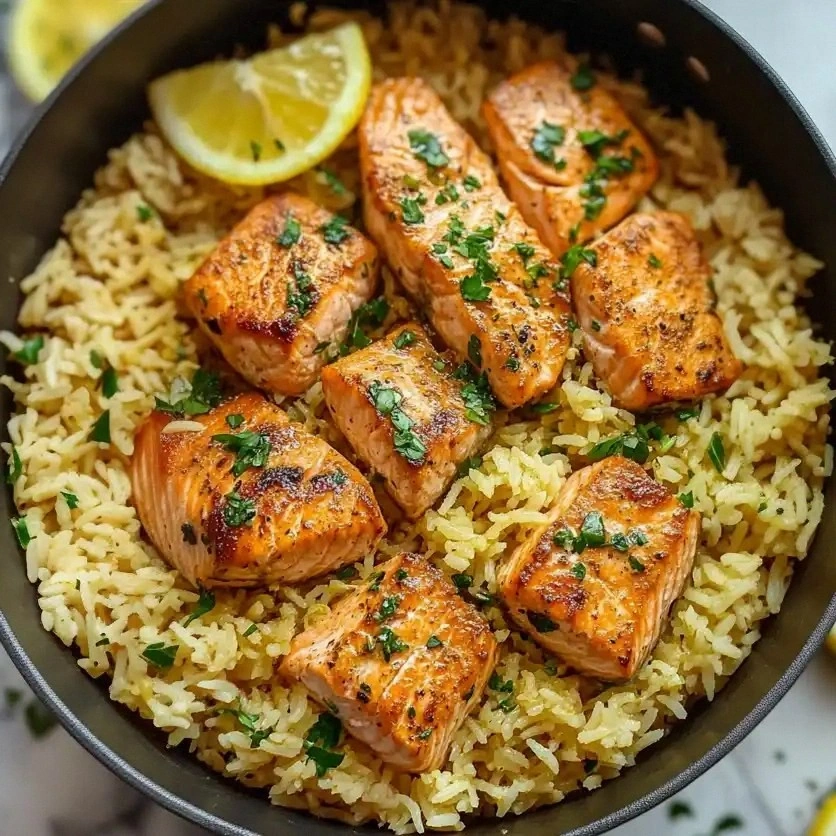
- Remove the lid, drizzle 2 tablespoons of fresh lemon juice over the salmon, and sprinkle 1 tablespoon of lemon zest and 2 tablespoons of chopped dill or parsley. The citrus brightens the dish, while the herbs add a fresh, green note that cuts through the richness. Gently stir to distribute the herbs, being careful not to break up the salmon fillets.
- Serve immediately, spooning the fluffy rice and savory broth onto plates. Garnish with extra dill or a lemon wedge if desired. The dish should look vibrant, with the salmon’s golden surface contrasting against the pale rice and bright green herbs. Take a moment to inhale the aroma—this is the moment of pure culinary joy.
That’s it — you did it. But hold on, I’ve got a few more tricks that will take this to another level. These insider tips will ensure every bite is a revelation.
Insider Tricks for Flawless Results
The Temperature Rule Nobody Follows
Many cooks assume that a high heat is essential for searing salmon, but it’s the low, steady simmer that locks in moisture. Cooking the fillets over a low heat allows the proteins to denature slowly, keeping the fish tender and flaky. A friend once tried a high‑heat method and ended up with a dry, rubbery texture that made me wish I had followed my own rule.
Why Your Nose Knows Best
During the simmer, pay attention to the scent of the broth. It should be warm and comforting, not sharp or burnt. If you notice a metallic or acrid smell, reduce the heat immediately. Your nose is your best quality control sensor, and it will guide you to the perfect finish.
The 5‑Minute Rest That Changes Everything
After the salmon is cooked, let the skillet rest uncovered for 5 minutes before serving. This resting period allows the steam to redistribute, ensuring the rice remains fluffy and the salmon’s juices are evenly dispersed. Skipping this step can leave the dish slightly uneven in flavor.
Use a Heat‑Resistant Lid
A heavy lid that fits snugly prevents steam from escaping too quickly, which can result in a soggy rice bed. If your skillet doesn’t have a proper lid, a sheet of parchment paper can serve as a makeshift cover that still lets steam escape in controlled bursts.
Keep the Salmon Skin On
Leaving the skin on the fillets not only adds flavor but also helps the salmon hold its shape during cooking. The skin crisps up slightly, creating a pleasant contrast in texture. If you prefer skinless fillets, be extra careful not to overcook them.
Fresh Herbs Over Dried
Fresh dill or parsley releases more aroma and color than dried herbs. The bright green hue enhances visual appeal, and the fresh flavor is more vibrant. If fresh herbs are unavailable, use dried as a last resort, but add them at the end of cooking to preserve their potency.
Creative Twists and Variations
This recipe is a playground. Here are some of my favorite ways to switch things up:
Asian Fusion
Replace the chicken broth with coconut milk and add a splash of soy sauce. Toss in a handful of sliced green onions and a pinch of toasted sesame seeds. The result is a creamy, umami‑rich dish that feels like a bowl of pho.
Greek Inspiration
Swap the paprika for oregano, and add a handful of kalamata olives. Finish with a drizzle of extra‑virgin olive oil and a squeeze of fresh lemon juice. The olives bring a briny depth that pairs beautifully with the fish.
Spicy Kick
Incorporate a teaspoon of crushed red pepper flakes into the sautéed aromatics. Add a tablespoon of sriracha to the broth for a subtle heat that doesn’t overpower the salmon. The dish becomes a fiery, comforting bowl that warms the soul.
Vegetable Boost
Add chopped bell peppers, zucchini, or spinach during the simmer. The vegetables will soften and mingle with the rice, creating a colorful, nutrient‑packed meal that’s perfect for a family dinner.
Herb Explosion
Use a mix of fresh herbs—rosemary, thyme, and basil—alongside dill. The combination yields a complex aromatic profile that elevates the dish to gourmet status.
Low‑Carb Swap
Replace the rice with cauliflower rice or shirataki noodles. The dish remains light, flavorful, and lower in calories, making it ideal for a keto or low‑carb diet.
Storing and Bringing It Back to Life
Fridge Storage
Cool the dish completely before transferring it to an airtight container. Store in the refrigerator for up to 3 days. The rice will maintain its fluffiness, and the salmon will stay moist.
Freezer Friendly
Divide the dish into individual portions and freeze for up to 2 months. Use freezer‑proof containers or heavy‑sided zip‑lock bags. Thaw overnight in the refrigerator before reheating.
Best Reheating Method
Reheat in a skillet over medium heat, adding a splash of water or broth to create steam. This technique restores the rice’s moisture and keeps the salmon tender. A quick microwave burst can also work, but stir halfway to avoid dry spots.